When one of CRI's teaching assistants was a PhD student writing a first paper for a journal indexed in the Science Citation Index (SCI), the draft alone took a year. Editing it took another six months. Looking back, more than half of that time went into simply not knowing how to fix what was wrong.
Almost every first-time author falls for the same illusion: once the conclusion is written, the paper must be done. In fact, that is where the real work starts. A research paper is not a place to sort out your own thoughts; it is written to be understood by other people. Editing and proofreading are therefore about much more than grammar. They are the process of rewriting the paper in language a reader can follow.
Editing and proofreading habits
What matters most in editing is not any single sentence but the overall impression. The goal is a reader who comes away thinking, "This is well organized." A few habits get you there.
Draft fast, but make the draft complete
A first draft does not need to be perfect. What counts is speed and structure. Many students stall here, polishing one sentence after another, but energy is limited. The moment the draft is done, it goes to your coauthors or mentor, and if you are already worn out, you will have little left for the revisions that come back.
So finish the draft quickly, but clean up the logical flow and the basic formatting (font, margins, notation) before you send it. A draft that is complete in form gets far more useful feedback.
Be selective with feedback
Comments from coauthors and mentors always arrive as a mix. If you cannot separate the changes you must make from the suggestions you can take or leave, revision drags on indefinitely.
You are the author, and you set the direction of the whole paper. Rather than folding in every comment, accept the ones that keep the paper consistent and persuasive. The aim is not a sentence that pleases everyone but one that carries a single, convincing line of argument.
Aim for a typo-free document
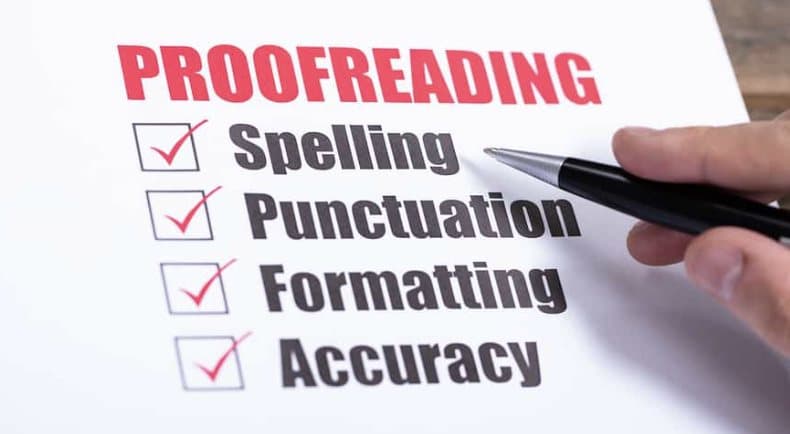
The end goal of editing is a beautiful document: clean, orderly and free of typos. Eliminating typos matters even more than perfecting your grammar. A book full of typos loses a reader's trust, and an English research paper is no different.