Can a student really write a research paper in 10 days? It's one of the questions families ask most often in Seoul Research Program consultations, and a fair one. Choosing a topic and reading the relevant literature sounds like a lot of work on its own, so a whole paper in that time can be hard to picture.
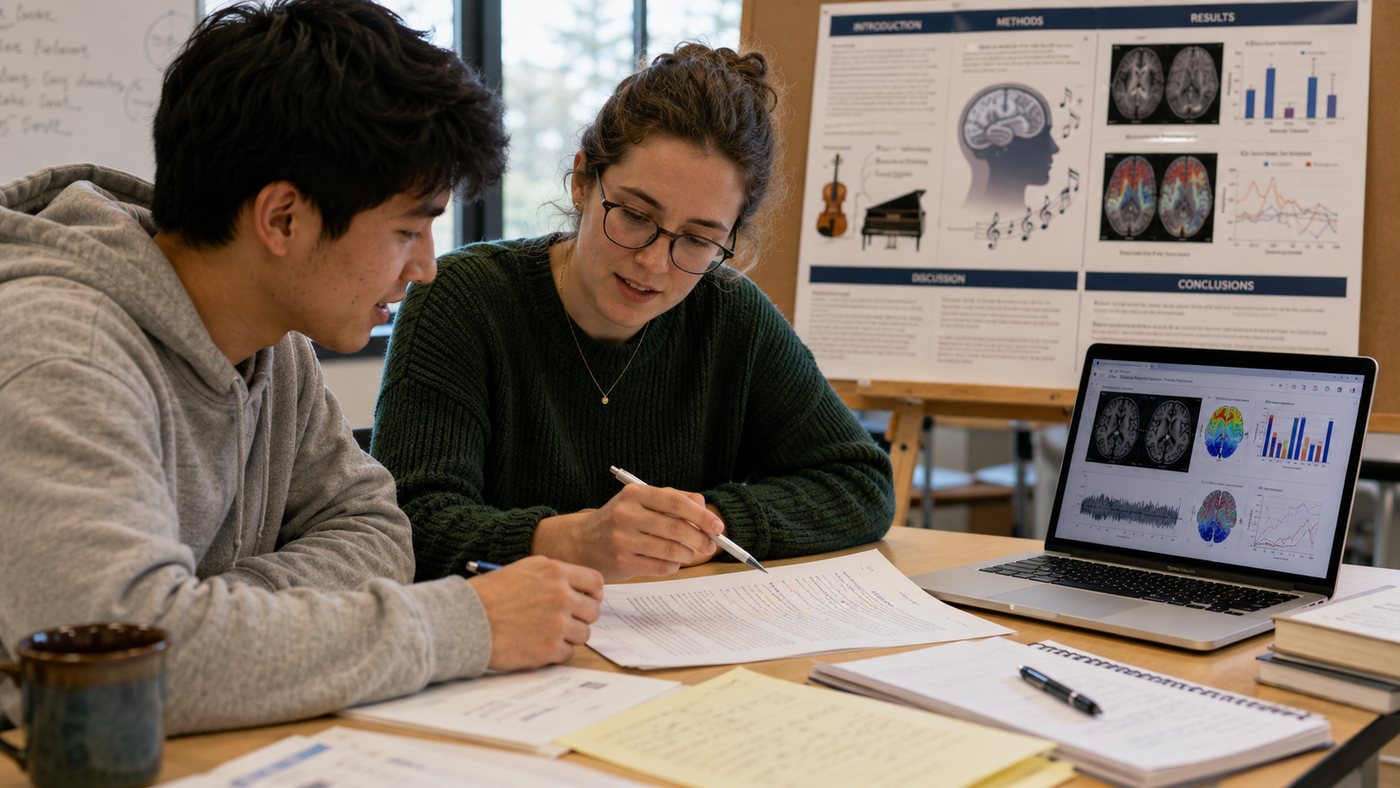
Here is what actually happens. Students don't stop at picking a topic and sketching an outline. Over 10 days they sharpen a research question, analyze prior studies, and write the substance of each part of the paper themselves: the central argument, the methods, the limitations, and directions for future work. By the end of the program, a draft with the paper's full structure and main content is largely in place. They then spend about a week revising with specific feedback from a TA before submitting the finished manuscript to their professor.
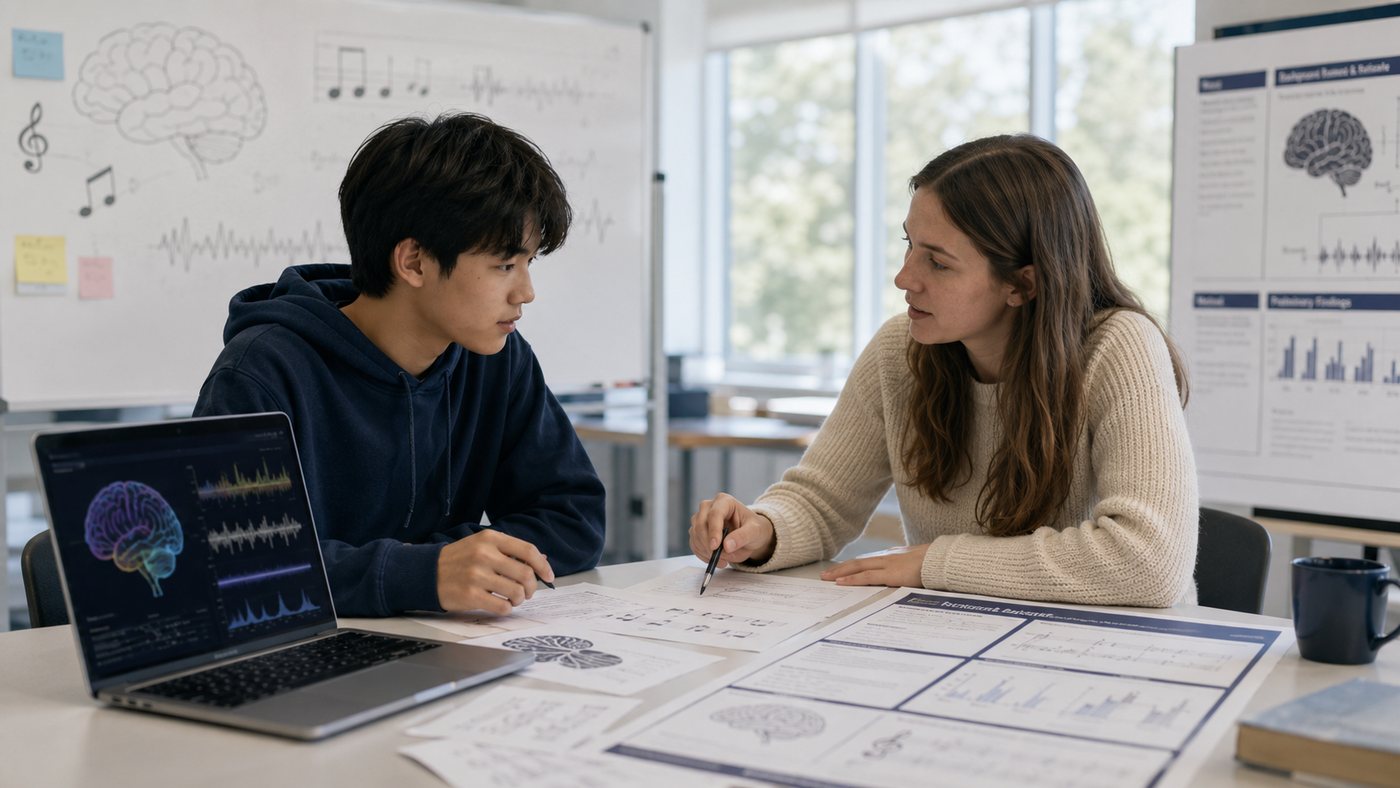
One student, who arrived interested in music and neurological disease, shows how that plays out.
A broad interest, narrowed down
The student came in curious about music, music therapy, and neurological disorders, but without a research question. "How does music affect the brain?" is an interesting topic. It is also far too broad for a single paper.
With feedback from the professor and a TA, the student stopped treating music as one undifferentiated stimulus and began looking at its individual elements: rhythm, timbre, and tonality. Reading the literature then suggested that each element might connect to a different biological pathway, such as neuroplasticity, gene regulation, or changes in brainwave activity.
That led to a much sharper question:
How do the individual acoustic elements of music affect the biological mechanisms associated with Alzheimer's disease?
A loose curiosity had become a question that spelled out what to analyze and which relationships to examine.