In Caltech chemist Brian Stoltz's class at the 2025 Seoul Research Program (SRP), D. and a classmate wrote a paper comparing three solvents that pull carbon dioxide out of smokestack gas, and it went on to be published in an academic journal. The newest of the three, a blend called CESAR-1, looked like the most promising, with one catch: under certain conditions, it can form byproducts that may cause cancer. In the SRP Extension, a follow-on program in which students dig deeper into the topic they began over the summer, D. went back to that catch and built a second paper around it, this time as the sole author. That paper was published too.
Carbon capture, briefly
Carbon capture is a technology for picking carbon dioxide (CO₂) out of the exhaust, or flue gas, that leaves factory and power-plant smokestacks. Think of a filter that catches one ingredient in the smoke and lets the rest pass. The chemicals that grab the CO₂ are known as amine solvents.
The first paper: which solvent works best?
The co-authored paper asked which amine solvent does the job most efficiently. The two students focused on three:
- MEA, the oldest and most widely used
- MDEA, studied as an alternative to MEA
- CESAR-1, a newer-generation blended solvent
They analyzed each one systematically: how well it captures CO₂, how much energy it takes to release the captured CO₂ again, and what side effects it brings, from damage to equipment to hazardous compounds.
The result was a review and comparison that showed, at a glance, how far carbon-capture technology has come. It made a clear case that CESAR-1 could be a more efficient alternative to the older solvents. It also flagged one important limitation: under certain conditions, CESAR-1 can generate harmful byproducts with carcinogenic potential.
A sharper question
That limitation is where D.'s Extension project began. The first paper had asked which solvent is better. The single-author paper asks something harder: once CESAR-1 is running at a real industrial site, what is the biggest obstacle standing in its way?
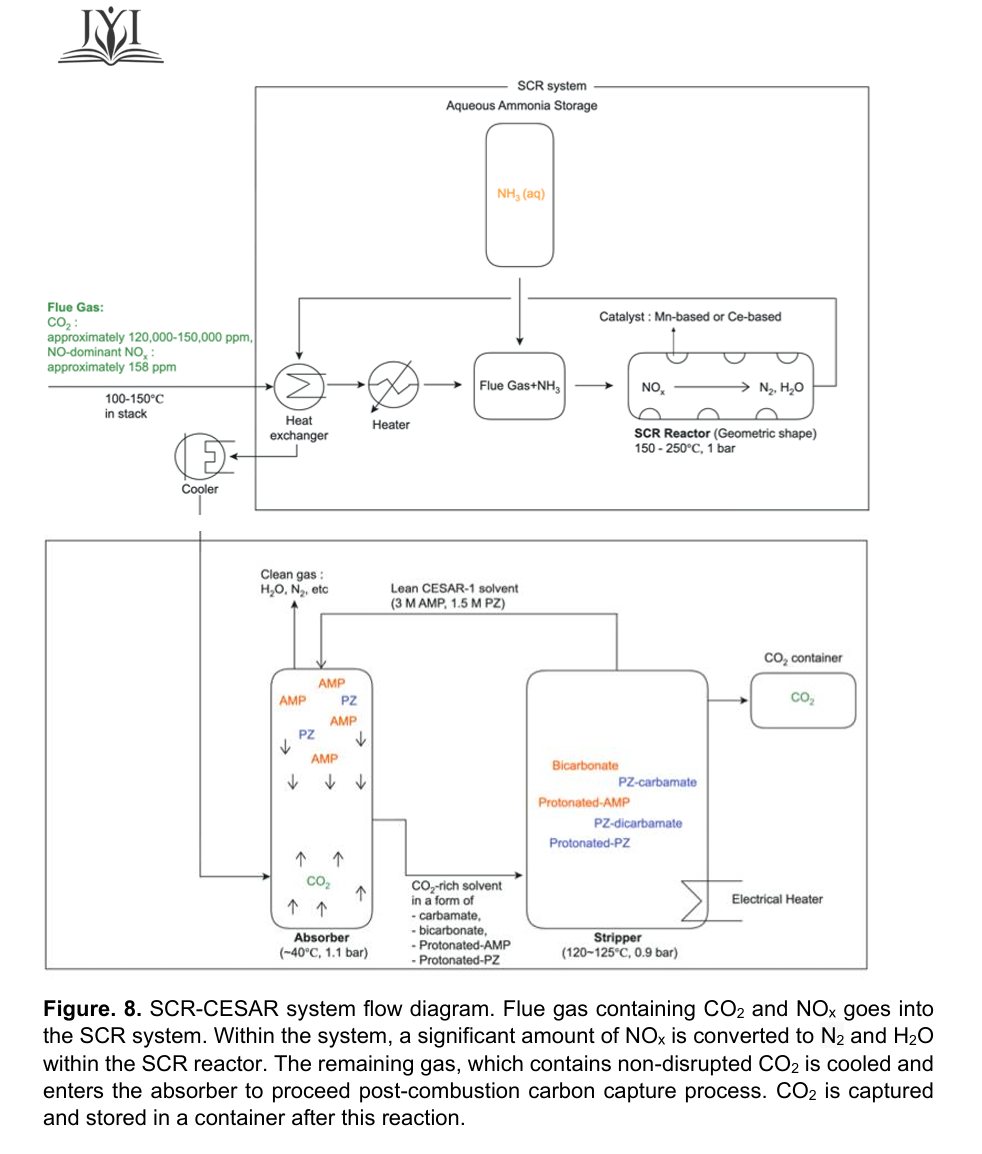
D.'s answer pointed beyond CO₂ to the nitrogen oxides (NOₓ) that arrive mixed in with the flue gas. When these gases meet CESAR-1, the solvent becomes more likely to break down or to produce harmful compounds.