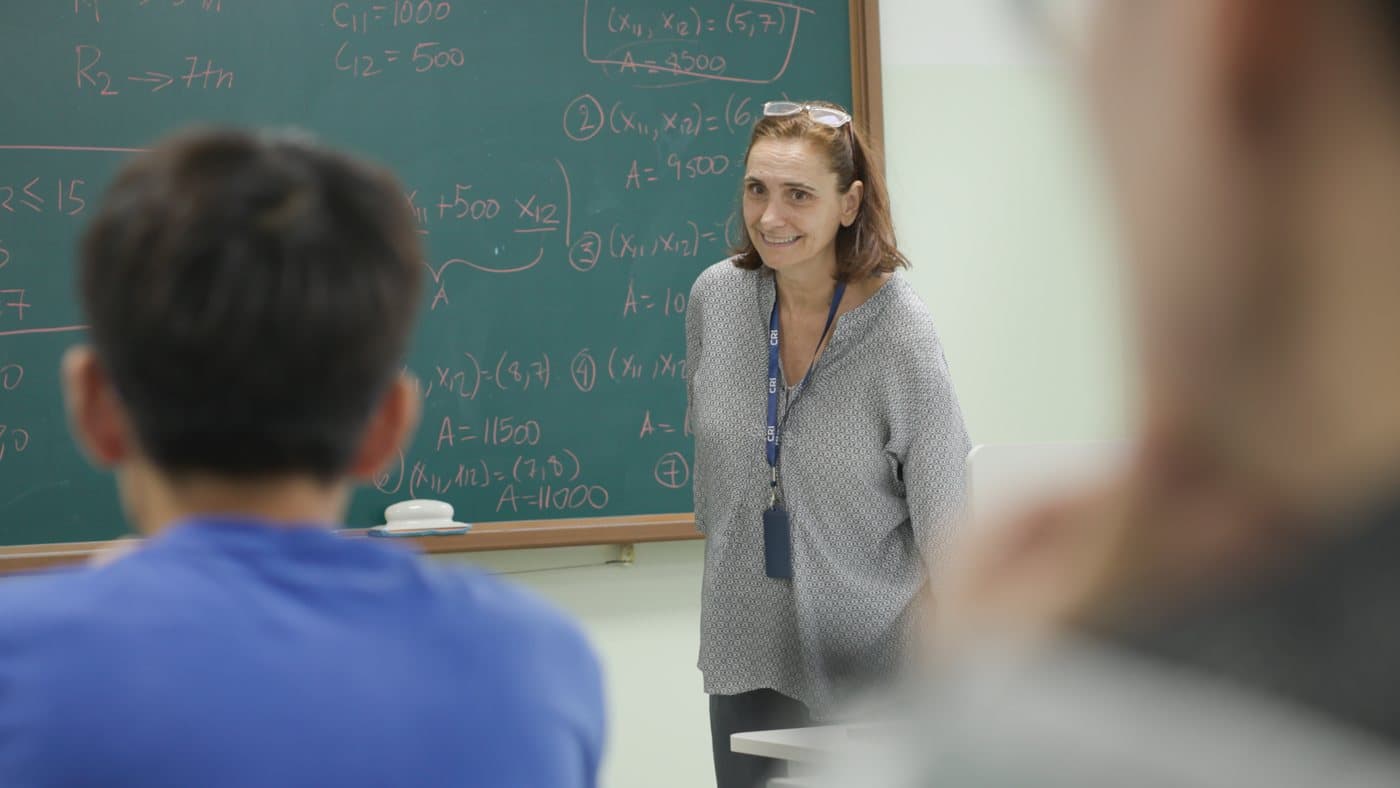
Why does this phenomenon look the way it does? And what do we have to simplify before we can understand it? Anastasia Romanou's course at CRI starts from those two questions every time, whether the subject is engineering, climate science, or economics. A climate modeler at NASA and a faculty member at Columbia University, she treats mathematical modeling not as a specialist's technique but as a basic way of making sense of a complicated world.
"We have already entered an era in which data and algorithms drive society as a whole. Tools such as numerical modeling and machine learning no longer belong to one particular major; they are used in almost every field. Students interested in this area should actively look for learning opportunities outside the classroom, too. Hands-on experience with the actual tools will help them enormously as they grow." — Anastasia Romanou, Columbia University and NASA GISS
A career spent modeling the climate
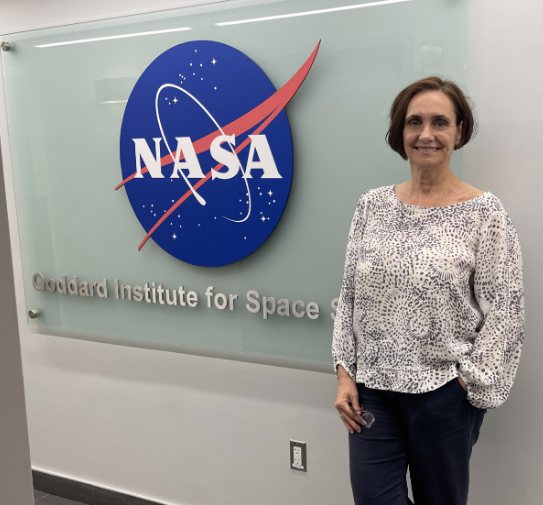
Romanou studied at the University of Athens in Greece and earned her PhD at Florida State University. Today she is an adjunct associate professor of applied physics and applied mathematics at Columbia University and a physical research scientist at the NASA Goddard Institute for Space Studies (GISS), where she uses mathematical models to study problems as complex as climate change and ocean circulation.
Her research interests include:
- Ocean circulation, in particular the meridional overturning circulation: how it varies, how stable it is, and its tipping points
- How the Earth system responds to changing emissions, including the heat and carbon the ocean takes up and whether climate change can be reversed
- Air-sea interactions and extreme events, including gas exchange across the air-sea interface and extreme variability in the Earth system
- Ocean and coupled ocean-atmosphere models, from general circulation models to full Earth system models
- Planetary modeling, adapting Earth system models to other planets in our solar system and to exoplanets
She is a former member of a research group on the Atlantic Meridional Overturning Circulation (AMOC), has been an invited speaker at scientific meetings including those of the American Geophysical Union (AGU), and contributed to the decadal survey report on Earth science and applications from space. Her teaching covers applied mathematics and machine learning, numerical computation and statistical analysis, and the models used in engineering practice and the social sciences.