Students interested in the Seoul Research Program (SRP) tend to ask the same three questions. What if there's no professor in my intended major? Will lower grades count against me? Can I apply without a research topic? They're fair questions, and they usually rest on the same assumption: that you have to be flawless from the moment you apply.
SRP looks at applicants differently. Students don't just pitch ideas here; they work with a professor to take a real paper all the way to completion. So every decision turns on one question: will this student see the paper through? Reviewers answer it by looking at direction, feasibility and commitment.
Three stages: application, interview, decision
Selection happens in three steps:
- Application. Your written application is reviewed first.
- Interview, by invitation. Only students who pass that review are invited to interview, online or in person.
- Final decision. Admission is decided after the interview.
Each stage asks something different of you. Your application has to be persuasive enough to earn an interview. The interview has to leave reviewers convinced that you will finish.
Why follow-through outweighs credentials
Writing a research paper takes more than being smart. Every project reaches a point where it stalls, and the students who finish are the ones who keep pushing instead of giving up. That is why SRP weighs how likely a student is to finish more heavily than their current credentials.
"There's no professor in my major"
CRI hears this one constantly. "I want to study economics. Can I still do SRP if there's no economics professor?" "I'm interested in the environment. What if nobody teaches environmental science?"
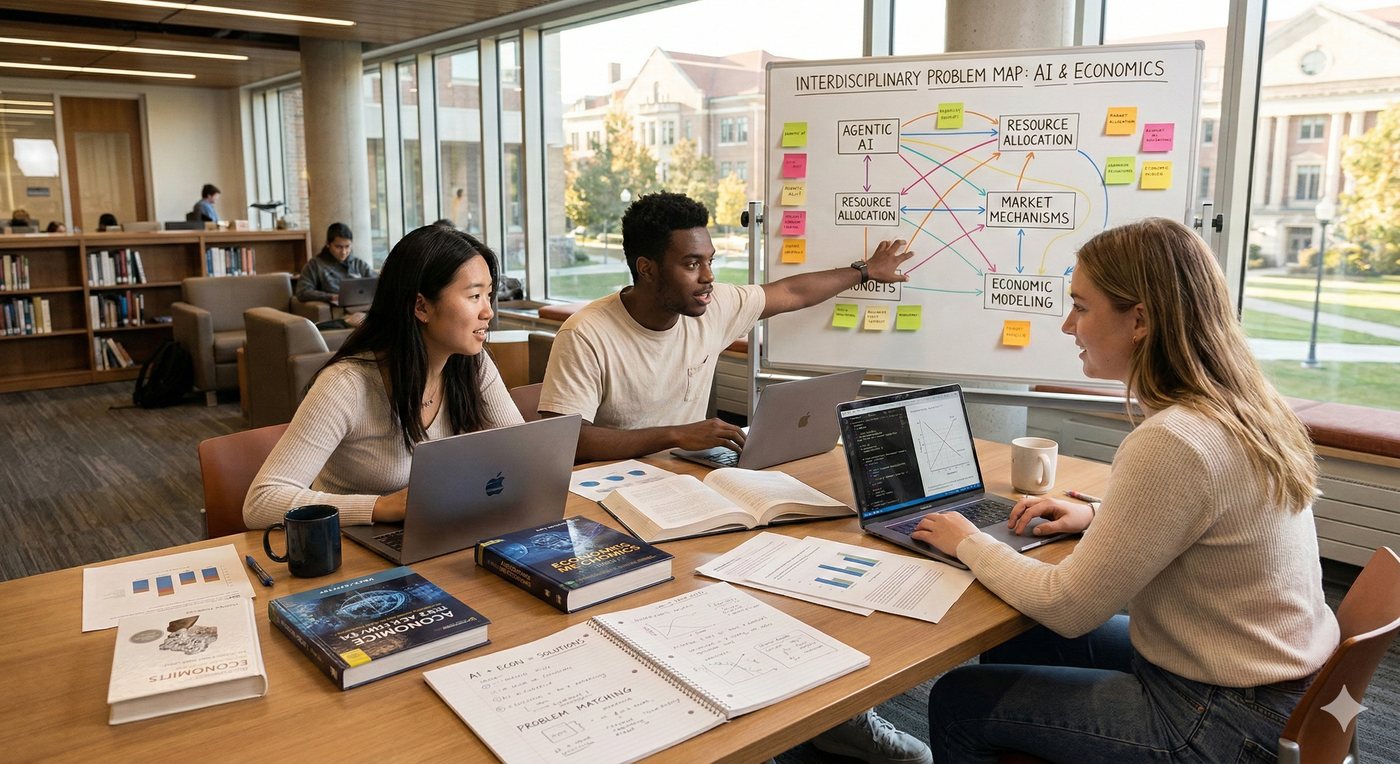
The key point is that research today doesn't divide neatly along department lines. Most of it is interdisciplinary, so what matters is the problem you want to solve and the method you use to solve it, not the title of your major.
Take Professor Haifeng Xu of the University of Chicago, who researches agentic AI. A student might reasonably assume an AI professor only suits future computer science majors. Look closely at his work, though, and you find AI used as a tool to tackle economic problems: markets, decision-making, resource allocation. So a future economics major can be a strong match, as long as they are clear that they want to solve economic problems with AI methods.