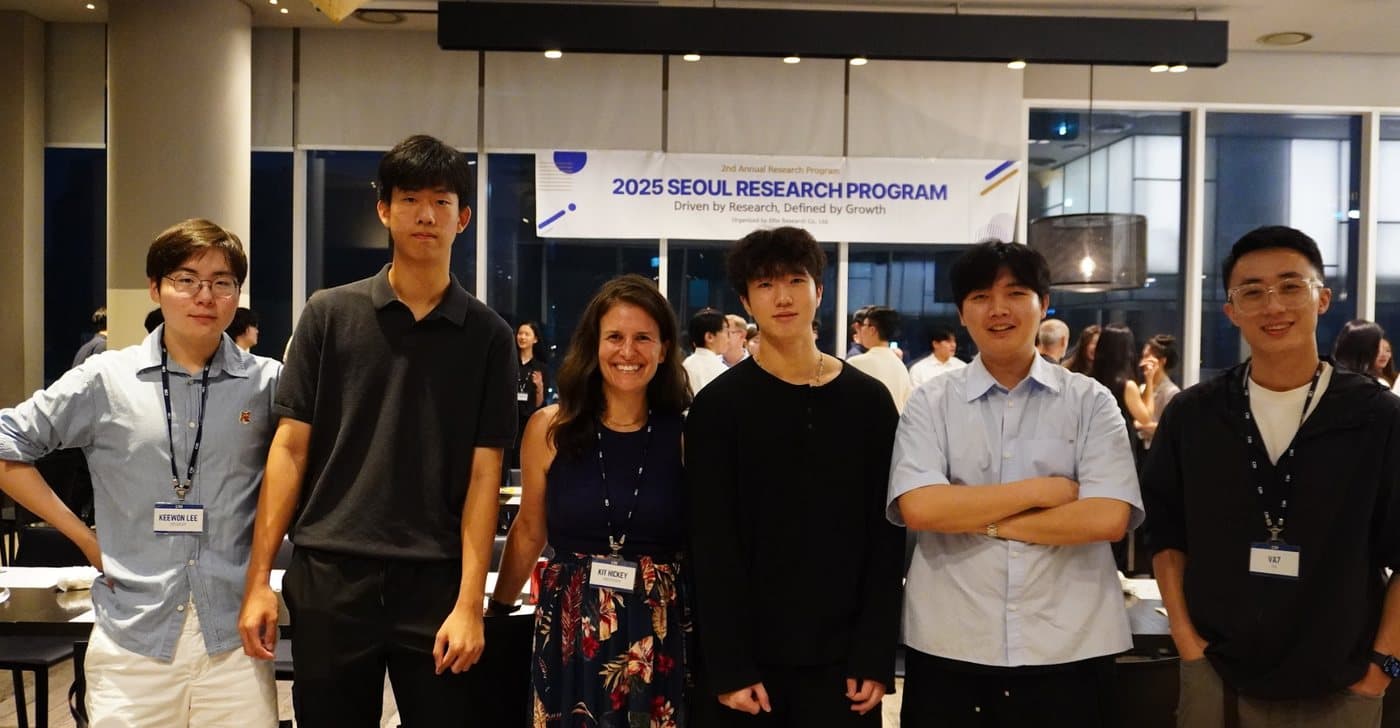
Kit Hickey teaches entrepreneurship from experience. While studying at MIT, she co-founded Ministry of Supply, a technology-driven fashion startup whose shirts, made with NASA technology, wick away sweat and help regulate temperature. Today she teaches at the MIT Sloan School of Management, and in CRI's Seoul Research Program she walks student teams through the same step-by-step process founders use to turn an idea into a company.
A founder in the classroom
Hickey ran Ministry of Supply successfully for several years. The shirts drew wide attention, and the company is still actively in business in the US. That experience shapes how she teaches. Her classes focus on the strategies and ways of thinking that founders actually need, organized around Disciplined Entrepreneurship, a 24-step framework developed at MIT. Step by step, it shows how a startup idea grows into a business and what it takes for that business to succeed in the market.
For Hickey, a startup is never just "a good idea." It is a system in which market analysis, customer understanding, fundraising, team building, and execution all depend on one another. Her course is designed so that students work through each stage of that system in order, practicing entrepreneurial thinking rather than just reading about it.
Her teaching style is warm and approachable, so students feel free to float ideas and form teams to explore the whole journey of launching a venture. Many students have said afterward that, for the first time, starting a company felt personal to them.
What the course covers
The course, "Innovation, Entrepreneurship, and Management: A Comprehensive Guide to Venture Creation," puts the 24-step Disciplined Entrepreneurship model, MIT's signature approach to entrepreneurship education, into practice. It centers on six topics:
- Market segmentation and customer analysis
- Product development and minimum viable product (MVP) design
- Building a business model
- Fundraising strategy and attracting investment
- Team building and organizational design
- Entrepreneurial storytelling and pitch strategy
Each day combines lectures and workshops on the core concepts, and a team project lets students apply them. Teams go well beyond proposing a business idea: they carry out market research, customer interviews, product design, and revenue-model analysis themselves. By the end, each team has written a report in the form of a research paper and designed a poster that presents its findings. The posters are shared at a poster session on the program's final day.