
Why does the same teaching method work in one classroom and fall flat in the next? Can a lesson be designed to build systematic thinking rather than rote memorization? Questions like these drive "Language, Learning, and Teaching Across Educational Systems," the course Oxford's Victoria Murphy leads in CRI's 2026 Seoul Research Program. Students study how children acquire language and how schools teach it, then investigate a question of their own in a small team research project.
Who teaches it
Victoria Murphy heads the Department of Education at the University of Oxford and is an internationally recognized expert in applied linguistics and language acquisition. Much of her research concerns children who speak English as a second language: how their language develops, and how vocabulary growth relates to the development of literacy. In interdisciplinary work on bilingual children, she has also investigated how learning a foreign language early in life affects literacy in a child's first language.
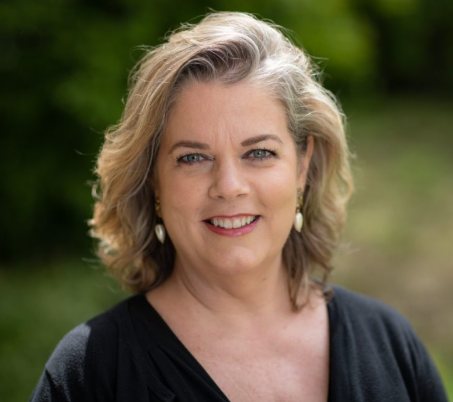
She has written two books and published widely in academic journals, and she has served as chair of NALDIC, the National Association for Language Development in the Curriculum, a UK association for language education in multilingual classrooms. In Seoul, she shares her latest research on language learning and teaching, along with her practical experience in the field.
What the course covers
The course examines language learning and teaching across different education systems, drawing on the fields of education, linguistics, and psychology. It works on three levels:
- Acquisition: the theory of how children acquire language
- Teaching: approaches to teaching in multicultural and multilingual classrooms
- Policy: how education policy connects to what happens in actual classes