
How do you keep one veto from undercutting UN sanctions? What legal design would draw private money into climate projects? Students in William Burke-White's course take on questions like these, and in team projects they approach them the way institution builders do: by designing the organization or treaty that could address the problem.
Burke-White, a professor of law at the University of Pennsylvania Carey Law School, has spent his career where international law meets foreign policy, both in academia and in government. He is one of the faculty mentors for CRI's 2026 Seoul Research Program.
A law professor who has worked inside foreign policy
Burke-White graduated from Harvard University, earned a master's degree in international relations at the University of Cambridge, and received his J.D. from Harvard Law School. Since then he has stayed active in international human rights and in efforts to reform international organizations.
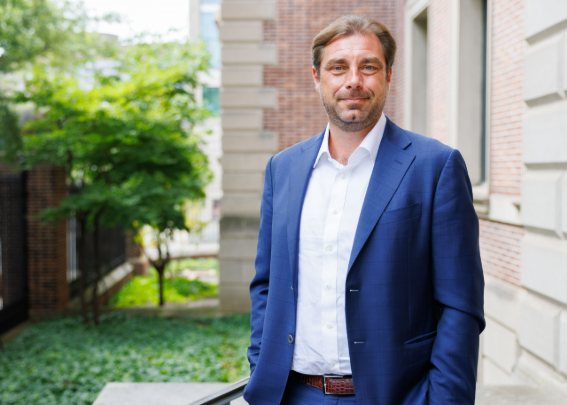
His work has never been confined to the classroom. During the Obama administration he served on the State Department's Policy Planning Staff, where he advised on international law, took a direct part in shaping US foreign policy, and led strategy work related to the United Nations and the International Criminal Court (ICC). That experience shapes his teaching, which goes past theory to show how diplomacy and international politics actually play out.
His research moves across international law, human rights law, global governance, and foreign policy. Three themes run through it: how international institutions should be designed and reformed, how international law can be enforced more effectively, and how emerging powers take part in the international order.
A course built around designing institutions
Burke-White's course is about designing international institutions to solve global problems, and it is project based. Instead of stopping at a theoretical understanding of world affairs, students work through the practical steps of building an institution and proposing policy. The course draws on law, international politics, economics, and development studies, and it asks students to think like the architects of international institutions and like diplomatic strategists.


