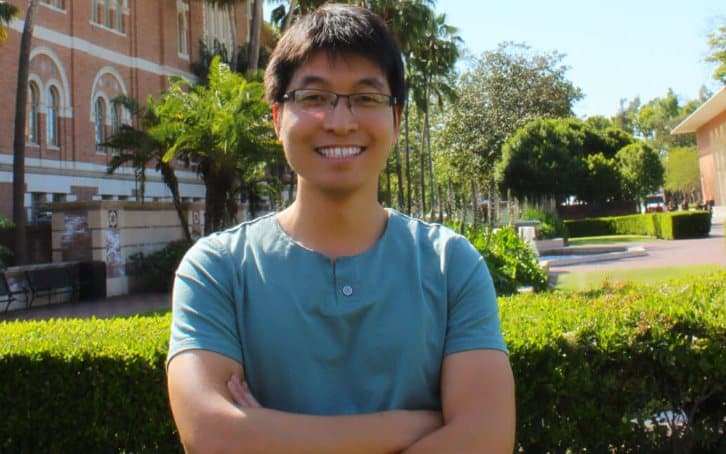
Most people picture artificial intelligence as a model that learns from data and predicts an answer. Haifeng Xu, a computer scientist at the University of Chicago, studies what comes next: AI agents that make their own decisions, sizing up a situation, cooperating with other agents, and sometimes competing with them, much as people and companies do. His CRI course, Algorithms & Agentic AI, teaches high school students the algorithms behind those agents over ten live online sessions, then asks them to put the ideas to work in a research paper.
What makes AI "agentic"
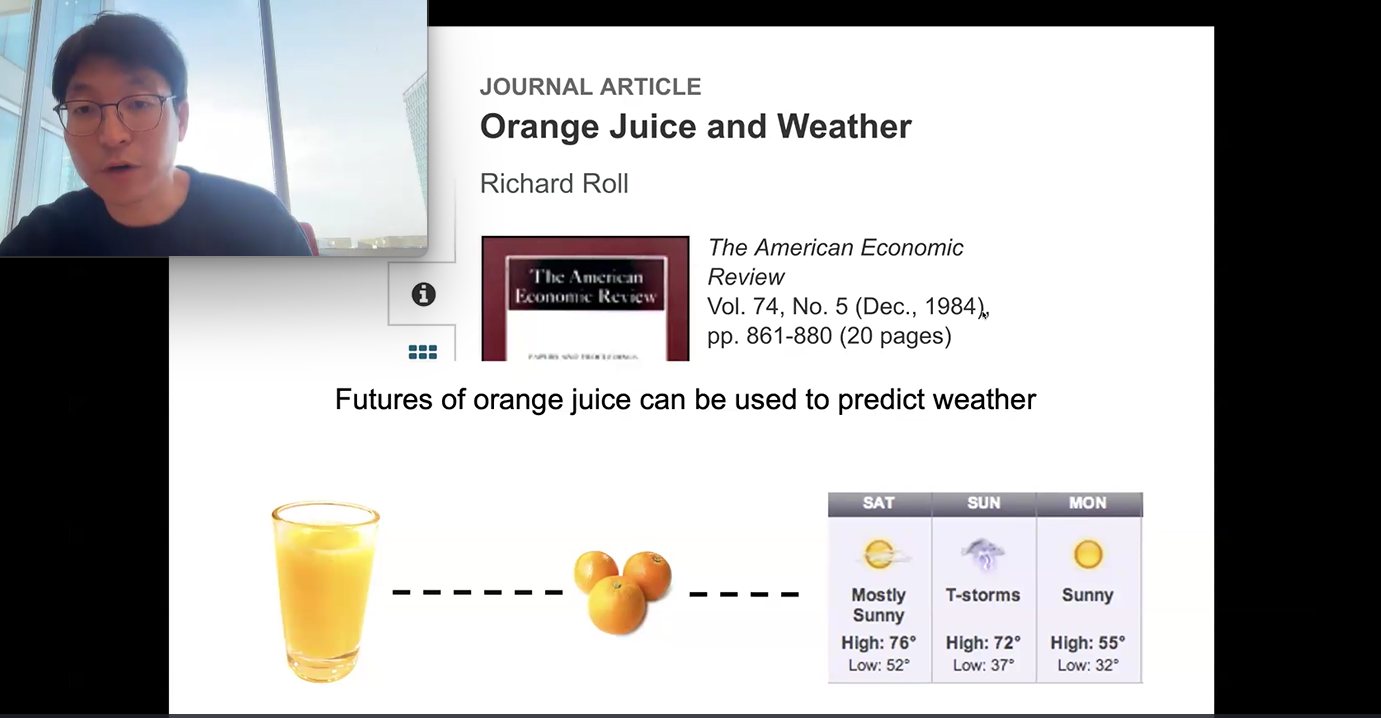
Where a prediction model calculates the right answer, an agentic system takes on a harder question: in this situation, what is the most effective thing to do? It works in a loop, producing a result, reviewing it, gathering feedback, cleaning its data, learning through reinforcement, and updating its model before going around again.
That kind of intelligence already runs through recommendation feeds, self-driving cars, game AI, and digital marketplaces, and it is one of the most active research areas at Google, OpenAI, and Microsoft. Industry is shifting its focus from large language models alone, a crowded field where products struggle to stand apart, toward agents built for specific applications that create real business value.
Universities are moving the same way. Stanford HAI studies AI that acts in the world, including the ethics of people and agents working together, and MIT CSAIL uses multi-agent systems to simulate policy. Xu's own lab concentrates on agent-based reinforcement learning, game theory, and market algorithms. The field also reaches well beyond computer science, into economics, psychology, political science, and education.
Who teaches it
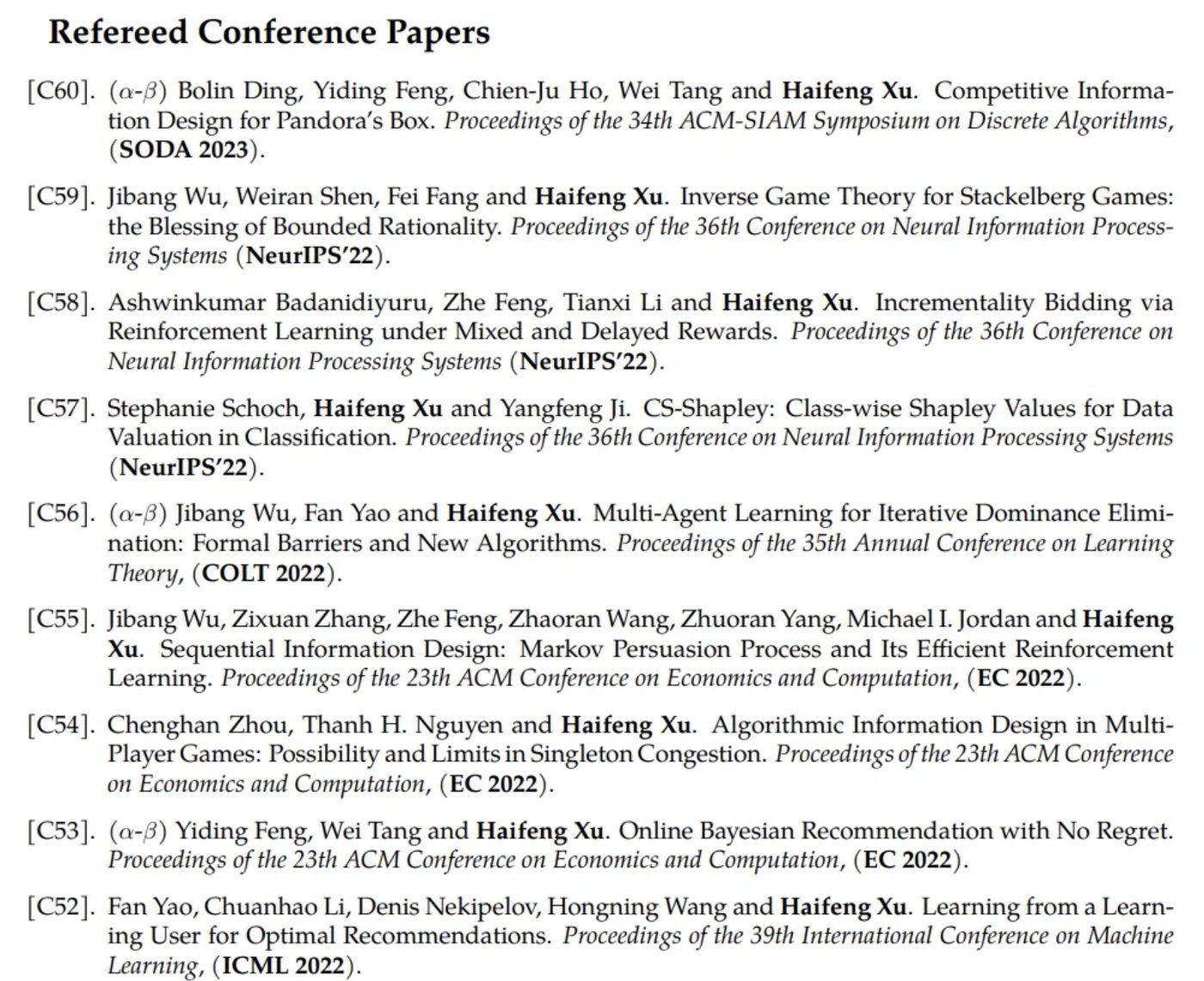
Haifeng Xu is a professor in UChicago's Department of Computer Science, where he directs the SIGMA Lab (Strategic Intelligence for Machine Agents). His research sits where AI meets economics: algorithms that let AI make decisions, game theory for situations in which people or firms act strategically toward one another, and mathematical models for making the best choice when information is limited. He publishes regularly at NeurIPS and AAAI, two of the top conferences in AI, and has collaborated with research teams at Google, JP Morgan, and Adobe Research.