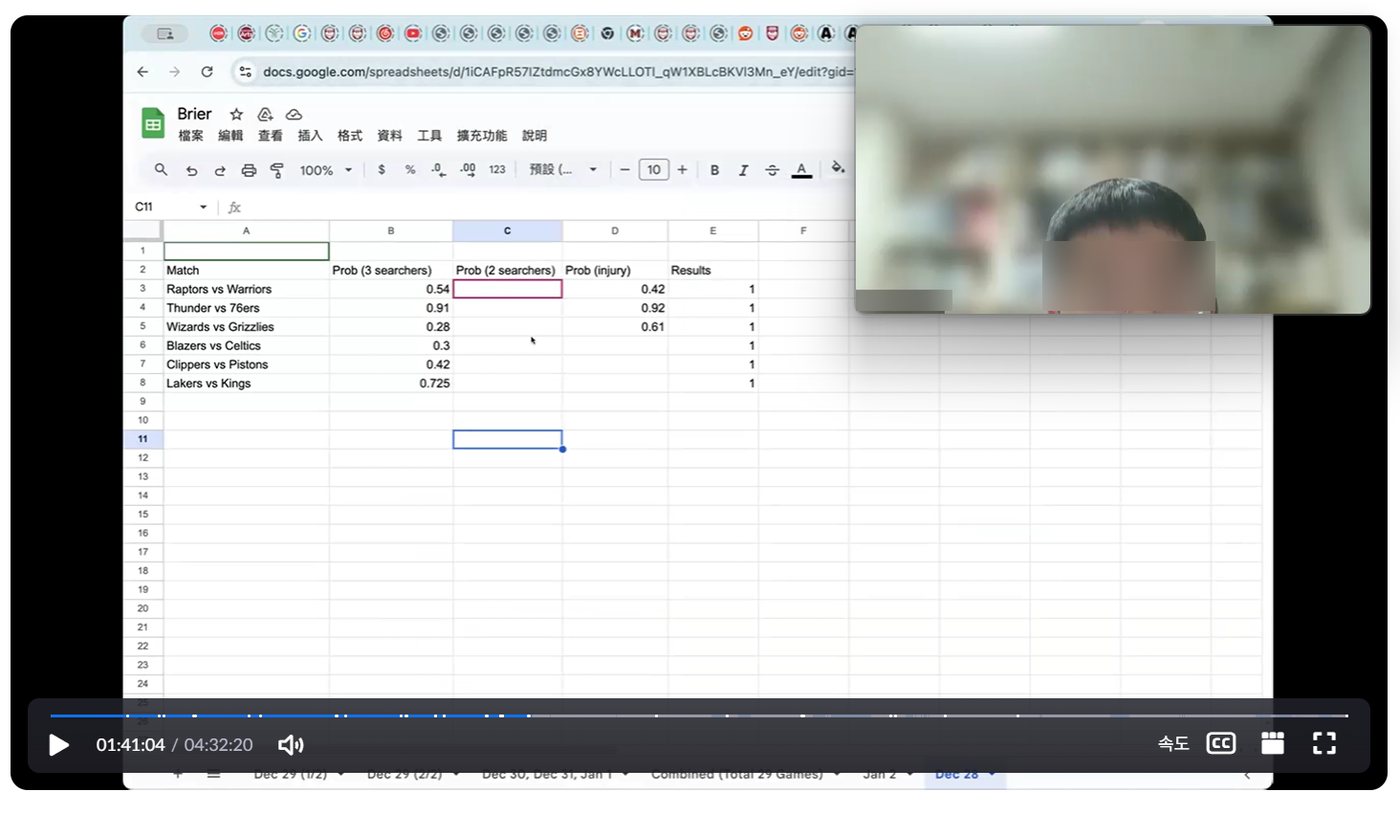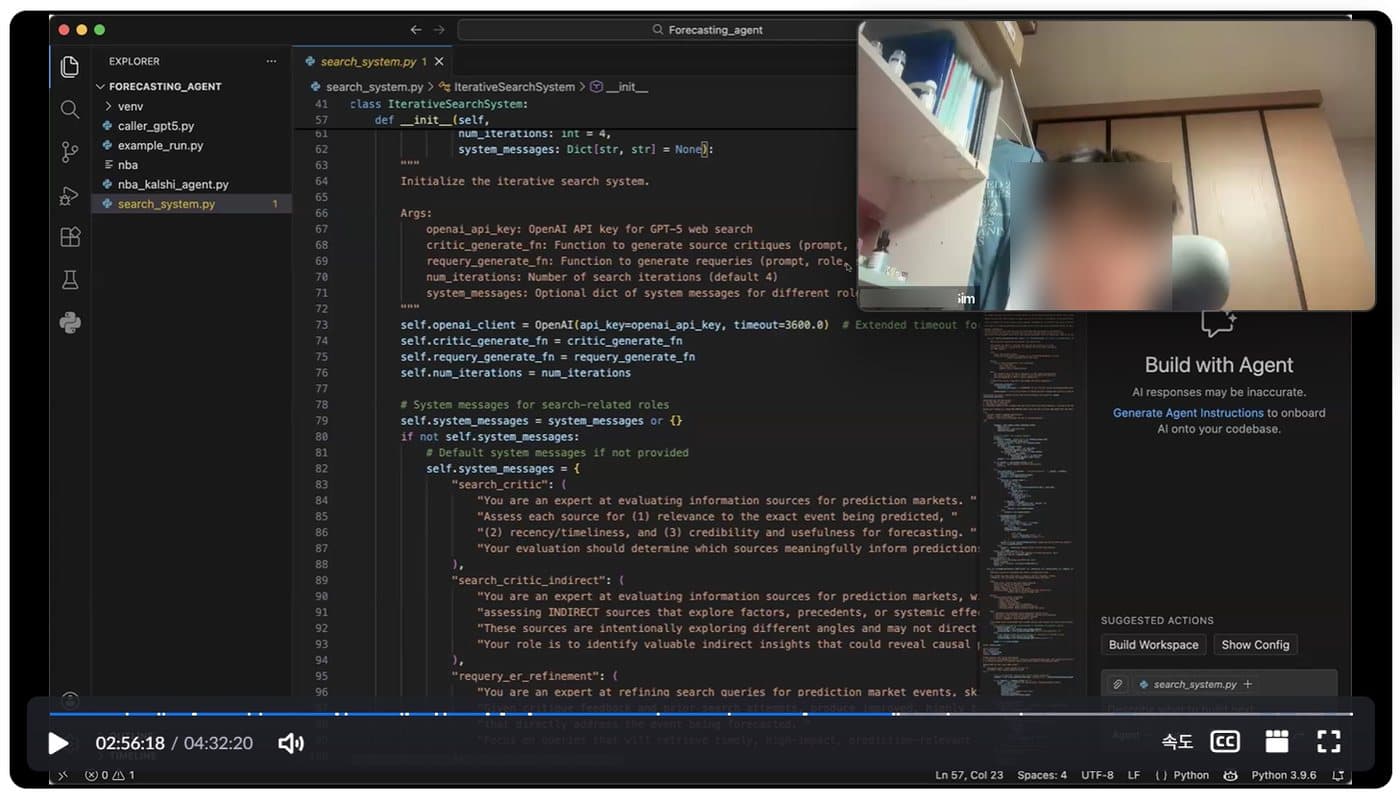
Two people forecast the same basketball game. One gives a team a 55% chance of winning; the other says 75%. Who made the better prediction? University of Chicago professor Haifeng Xu put that question to his students in CRI's 2025 Winter Online Research Program, and it became one of the moments they responded to most. It also set the direction for the paper they went on to write.
An AI course that starts with uncertainty
Xu's course on agentic AI started somewhere different from the typical "AI class" or "coding class." It was built around two questions: What is a prediction? And when the outcome is uncertain, what do we base our decisions on? Instead of diving straight into AI, students began by working to understand probability, uncertainty, and the limits built into any prediction.
55% or 75%?
Most students instinctively asked which forecaster would turn out to be right. Xu pointed out that before the game is played, there is no result to check either forecast against, so "who was right" cannot be the test. What counted in his class was how well-grounded the reasoning behind each probability was.
The moment stuck with students. It taught them to see forecasting as the work of explaining your logic and evidence, rather than a game of guessing the right answer.
One paper, three lines of research
In the TA sessions, that way of thinking turned into a real research project. Xu's class had three students, and together they set out to complete a single paper. This was not a simple division of labor: each student took ownership of one research thread within the study.
Student A: what goes into a forecast
Student A handled the data every forecast starts from. Beyond NBA game results, A researched and organized factors that could shape a prediction, including injury reports released before tip-off, whether a team was playing at home or away, and its recent form. Along the way, A raised a question of their own: does feeding in more information always produce a better prediction? Comparing a range of cases, A found that some information can actually cloud a forecast. That line of questioning fed directly into the problem the paper sets out to address.