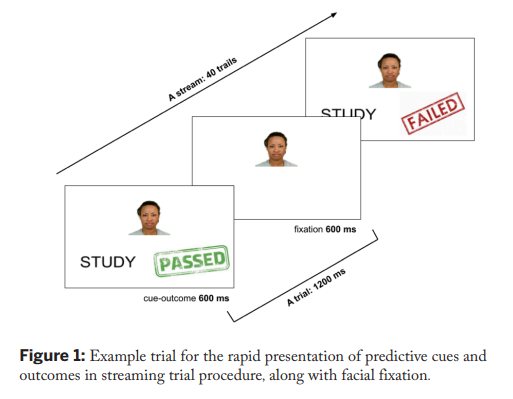
"Can tears cloud a person's judgment?" For K., an international-school student on Jeju in a CRI research program, that question became a full psychology experiment. In winter 2024, working with Robin A. Murphy of the University of Oxford, K. designed the study, ran it online with 40 adults and wrote up the results as a research paper. The paper went through formal peer review and was published in the International Journal of High School Research (IJHSR). In the admissions cycle that followed, K. was admitted to both Stanford and Oxford.
A mentor who studies how minds learn
Murphy teaches in the Department of Experimental Psychology at Oxford. He is also Fellow and Tutor for Admissions at Corpus Christi College. His research spans learning, memory, cognition and psychopathology, and centers on associative learning in humans and animals: how we learn about the world, remember it and respond to it. Put simply, he asks why two people can go through the same experience and come away feeling and acting differently. He is especially known for work on how cognitive biases relate to the way we learn.
Murphy is regarded as a pioneer of computational psychopathology, a field that uses mathematical and computer models of learning to explain anxiety, depression and fear as errors in learning. He directs the Computational Psychopathology Research Group, and its findings feed into the scientific basis for treatment, including cognitive behavioral therapy (CBT). Beyond the university, his lab has collaborated with companies and organizations including Siemens, Barclays Bank and Publicasity, applying what it knows about learning and decision-making to business, communication and risk assessment.
He has published widely in international journals and has long experience supervising students. His approach to teaching is exacting but warm:
"It doesn't matter whether a student finds the 'right answer.' What matters is being able to explain, on their own, why they reached it." — Robin A. Murphy, University of Oxford
Murphy gives students direct feedback on everything from the fine logic of an experimental design to data interpretation, the ethics of testing a hypothesis and the rigor that psychological reasoning demands. Working from his feedback each week, K. refined the research question, adjusted the variables in the design and brought the paper to completion.