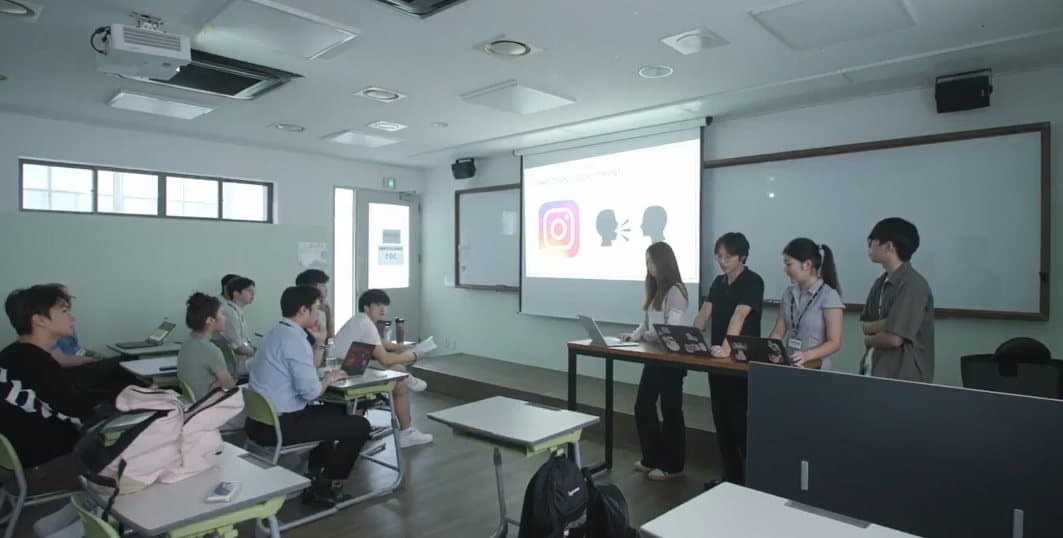
What happens to temperature and rainfall under different greenhouse gas emission scenarios, or if renewable energy spreads faster? In George Tselioudis's course in CRI's Seoul Research Program, students don't just read about questions like these. They work with real NASA satellite observations of clouds and radiation, build a simple climate model of their own, run greenhouse gas scenarios through it, and write up what they find as a group research paper.
Who teaches it
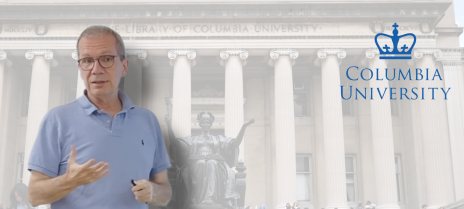
George Tselioudis is a senior research scientist at the NASA Goddard Institute for Space Studies (GISS) and a professor in Columbia University's Department of Applied Physics and Applied Mathematics. He leads a team that combines observations with climate model simulations to study clouds, radiation, changes in precipitation, and radiative feedbacks.
Satellite data analysis and climate modeling are his specialties. He has used the GISS coupled atmosphere-ocean model to simulate and analyze long-term climate change, and he has been active in international climate research, serving as an author of the Fourth Assessment Report of the Intergovernmental Panel on Climate Change (IPCC). In 2004 the American Geophysical Union recognized his work with the Charles S. Falkenberg Award.
What the course covers
The course moves from atmospheric physics to the satellite data researchers use to study it, and then to models students build themselves:
- Cloud and radiation physics. Professor Tselioudis's lectures cover the basics of cloud particles and atmospheric radiative processes, and how they shape the climate system.
- Reading satellite data. Students analyze actual NASA satellite observations of cloud and radiation properties in the atmosphere, and learn how to use that data to evaluate climate models.


