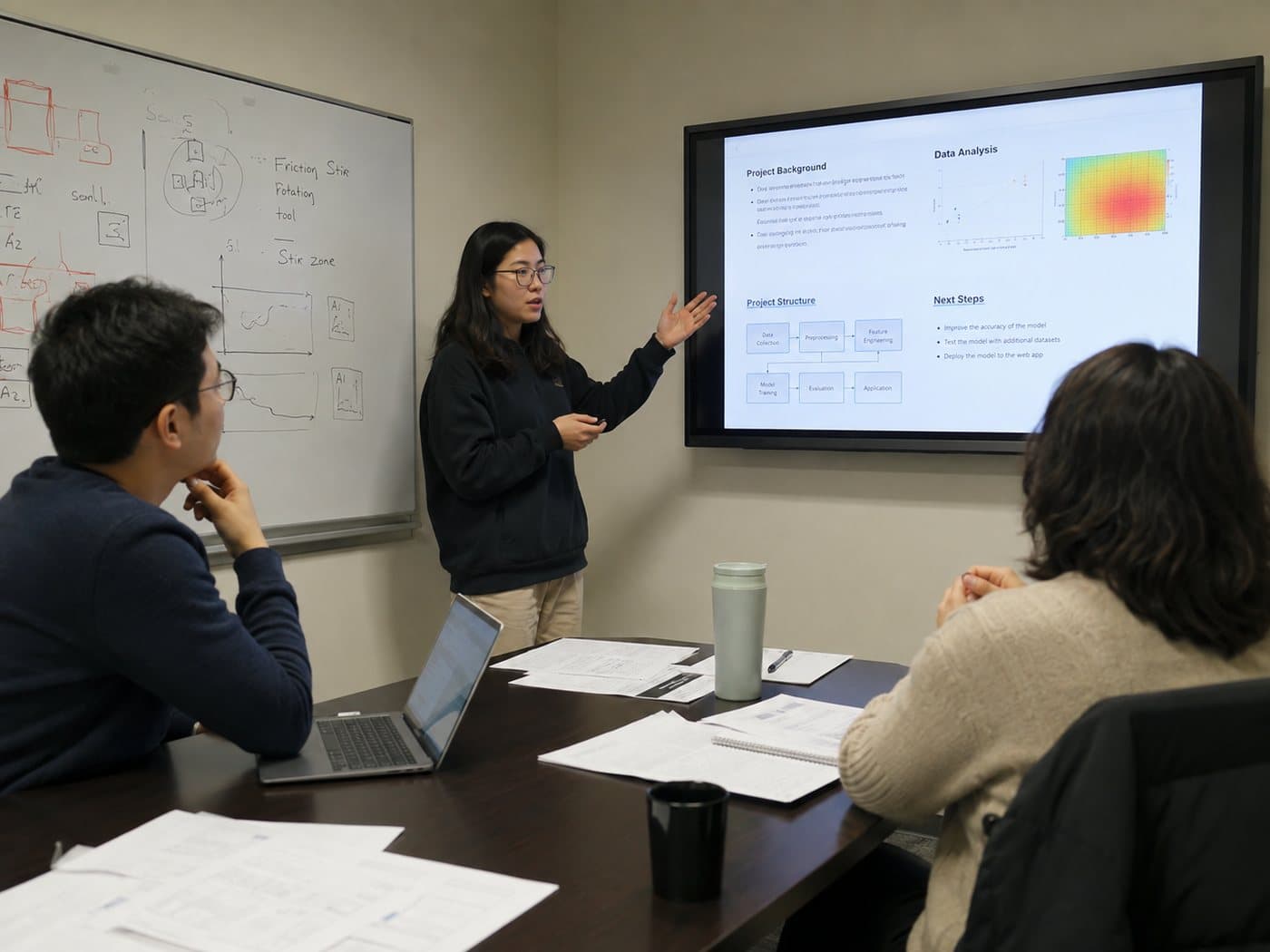
"Why do you think that?" "Could something else explain it?" "What's your evidence?" Students in CRI's Seoul Research Program (SRP) hear questions like these constantly. In a newly released faculty interview video, the professors who taught the 2025 program explain how they work with high school students, and why they teach this way.
Faculty who appear on camera include Brian Stoltz of Caltech, Ryan Fang of the University of Chicago, Nabil Alshurafa of Northwestern University and Kit Hickey of MIT. Each year CRI invites professors from research universities such as Harvard, MIT, UChicago, Oxford and Cambridge. Yet where a professor comes from matters less than what happens in the room: how they treat students, how they build a student's thinking, and how closely they stay involved. On those measures, the way CRI's faculty work is different by design.
Teaching the "why," not just the "what"
Most students can follow an explanation. Far fewer can say, in their own words, why it holds. As the faculty put it in the interviews:
"Students know the result, but they have never thought deeply about why." — Seoul Research Program faculty, 2025 interviews
So CRI's faculty don't simply lecture. They keep pressing with questions like the ones above, and those questions are more powerful than they look. They move students from memorizing to investigating, and they quickly build the kind of analytical thinking universities expect.
A driving coach, not an answer key
Several professors reached for the same analogy: the student sits in the driver's seat, and the professor rides alongside, ready to brake. Ryan Fang described his role as teaching students how to drive. "So I'm like a driving coach," he said, the kind who hits the brake only "when necessary."
It's a simple approach, and a highly effective one. The student chooses the topic, forms a hypothesis, works out how to test it, interprets the data and states their own conclusion. The professor watches the whole process, steers the student back when the work heads in the wrong direction, and shows them how to build a sound argument.
What students take away is the ability to lead a research project on their own. That is the capability universities value most.