Eight professors by the Han River: how the 2025 Seoul Research Program began
The night before SRP 2025 opened, eight visiting professors met by the Han River to talk about students. Here is who taught, who came to learn, and how the first classes went.
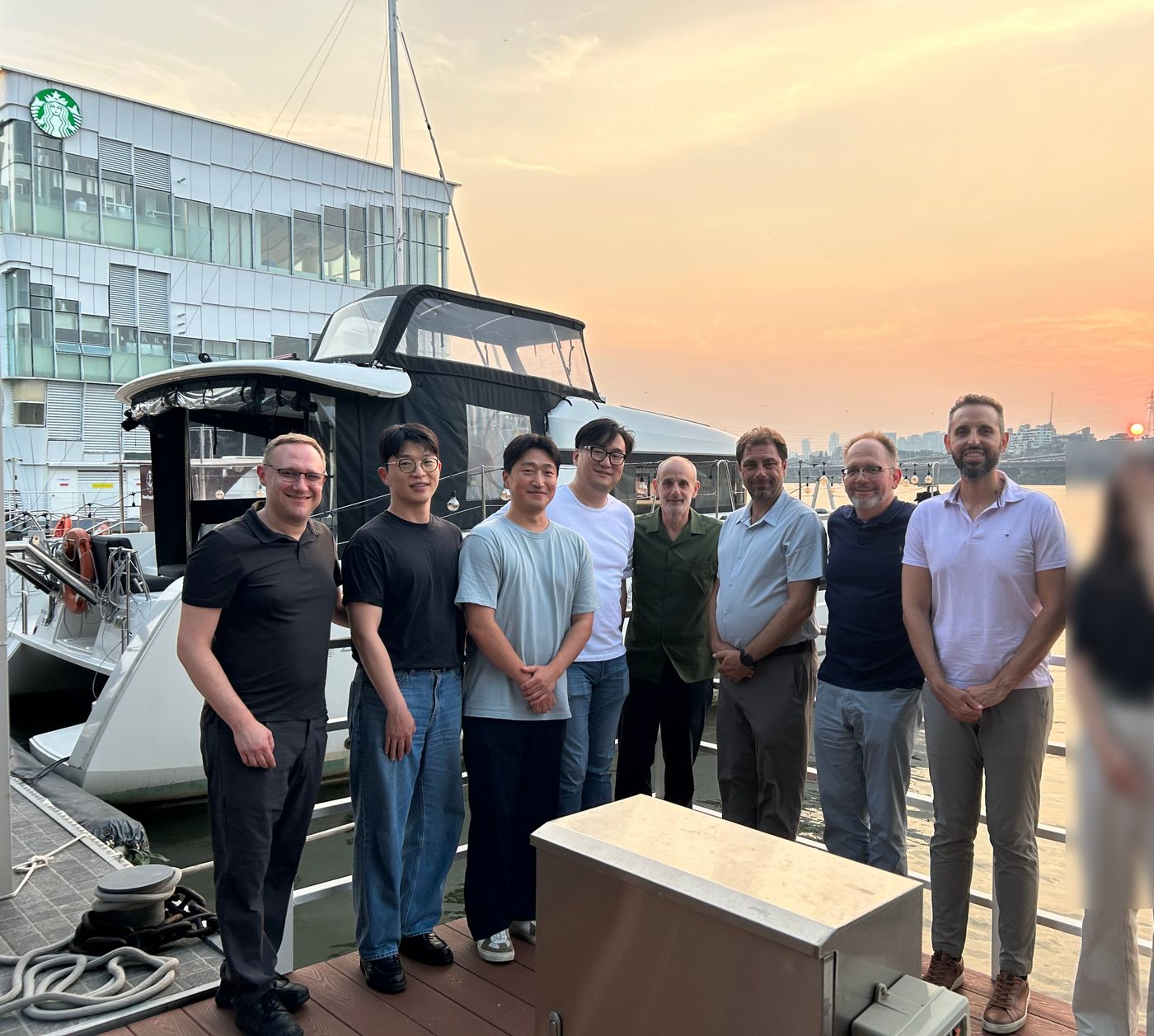
The evening before the 2025 Seoul Research Program (SRP) began, a small group sat down to dinner on the banks of the Han River just as the sun started to set. From a distance it looked like any summer dinner in Seoul. The guest list said otherwise: eight professors from universities including MIT, Harvard, Oxford, the University of Pennsylvania and Northwestern, and the CRI team that had built the program with them.
A dinner about people, not papers
Research could wait. The conversation that night was about the students. How do you get high schoolers to ask real questions, stop fearing failure, and leave having genuinely learned a lot?
Faculty and members of the CRI team by the Han River, the evening before SRP 2025 began
Word that the professors were coming to Korea had traveled fast. Universities, institutions and companies reached out as soon as they heard, asking for lectures, interviews and meetings. The professors graciously declined them all, explaining that this time they wanted to give their full attention to their students. They had come to Seoul for one reason: to teach students what real research looks like.
The 2025 faculty
Each of the eight professors led a different research track:
Kit Hickey, MIT: business, entrepreneurship and venture capital. An entrepreneurship leader at MIT Sloan and a Silicon Valley entrepreneur. The course ran from market segmentation and sizing a total addressable market (TAM) to quantifying a value proposition, business model design, product planning and supply-chain optimization.
Max Krasnow, Harvard: behavioral science, psychology, sociology and communication. A Harvard psychologist and TEDx Cambridge speaker who studies evolutionary psychology and human behavior. Topics included natural and sexual selection, the domain-specific mind, adaptations for finding food, human mating psychology and kin selection.
Have a question you want to investigate?
Explore our faculty-guided programs, or tell admissions what you are curious about.
Brian Stoltz, Caltech: medicine, biochemistry, pharmaceutical and materials science. A leading chemist and a recipient of the Feynman Prize. The course built from organic structure, bonding and stereochemistry to functional groups, acidity, oxidation levels, reaction mechanisms, olefins and carbonyls.
Nabil Alshurafa, Northwestern: biotechnology, welfare and preventive healthcare. A medical school professor, a pioneer in mobile health and wearables, and the leader of the HABits Lab. Students studied sensor-based health monitoring, behavioral interventions, nutrition and chronic-disease prevention, and the ethics and privacy of health data.
William Burke-White, Penn: international law, policy, international relations and environmental policy. A law professor who served as a policy planner in the Obama administration and has advised the G8, the G20 and international organizations. The course covered the structure of international law, treaties, international institutions, investment protection, transnational threats and the regulation of the use of force.
James Savoca, USC: film, production, scriptwriting and cinematography. A film producer for Amazon Prime, a Broadway director and an acting-workshop leader. Students studied cinematic storytelling, how to give a scene purpose and emotional weight, independent cinema, directorial technique in films such as Parasite and Oldboy, and scriptwriting.
Ryan Fang, University of Chicago: economics, behavioral economics and strategic interactions. A specialist in game theory and behavioral economics. Topics included economic decision-making, strategic interaction and market dynamics, consumer biases, market structures from oligopoly to monopoly, and government intervention through welfare and subsidies.
Liam Francis Gearon, Oxford: pedagogy, education, policy and technology. A UNESCO education expert whose work spans education, philosophy and religion. The course compared Asian and Western education systems and examined education's role in social mobility, educational inequality and the global spread of educational models.
First morning: orientation
The next morning, students arrived at CRI's Seoul campus for day one. Some came in looking nervous and others visibly excited, but the room shared one mood. Everyone there had come ready to learn.
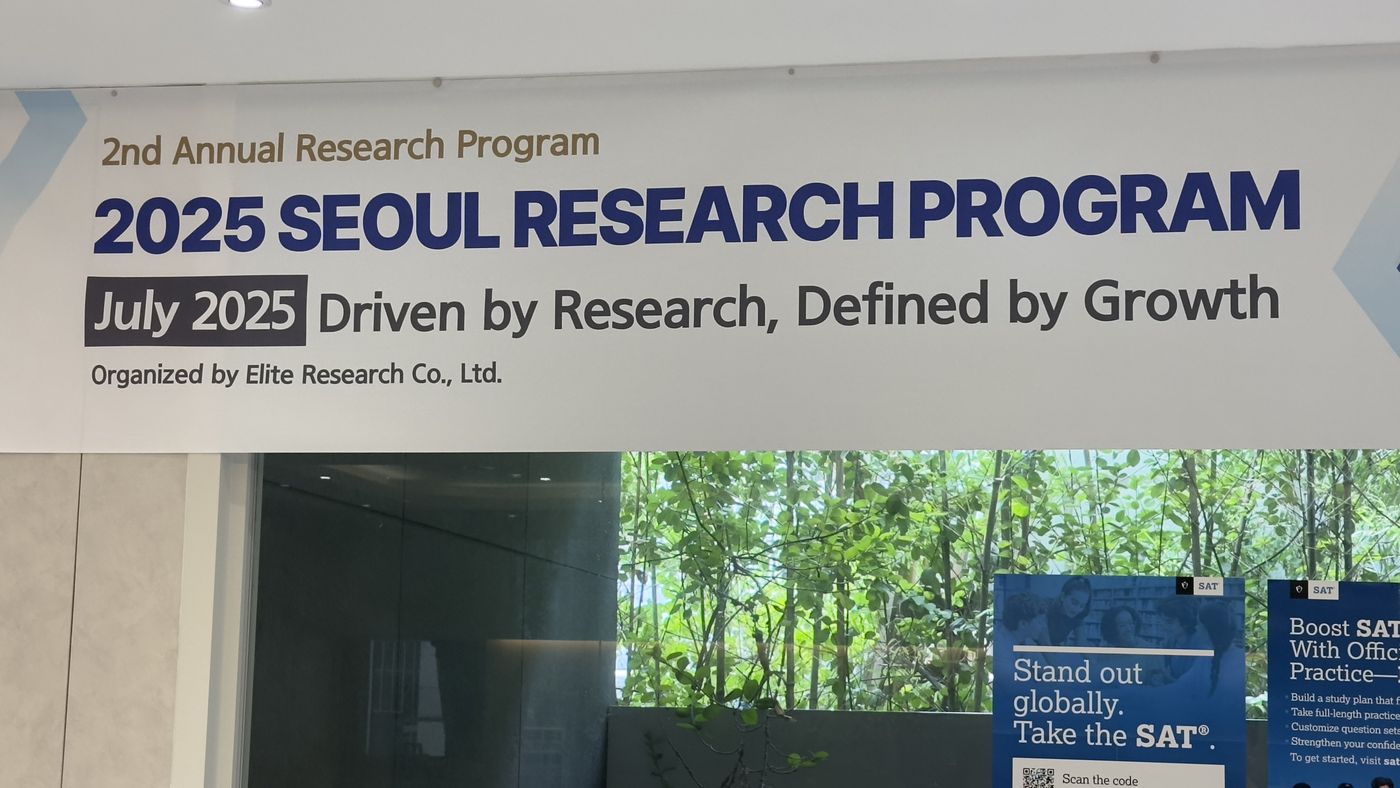
The welcome banner for the second annual Seoul Research Program, July 2025
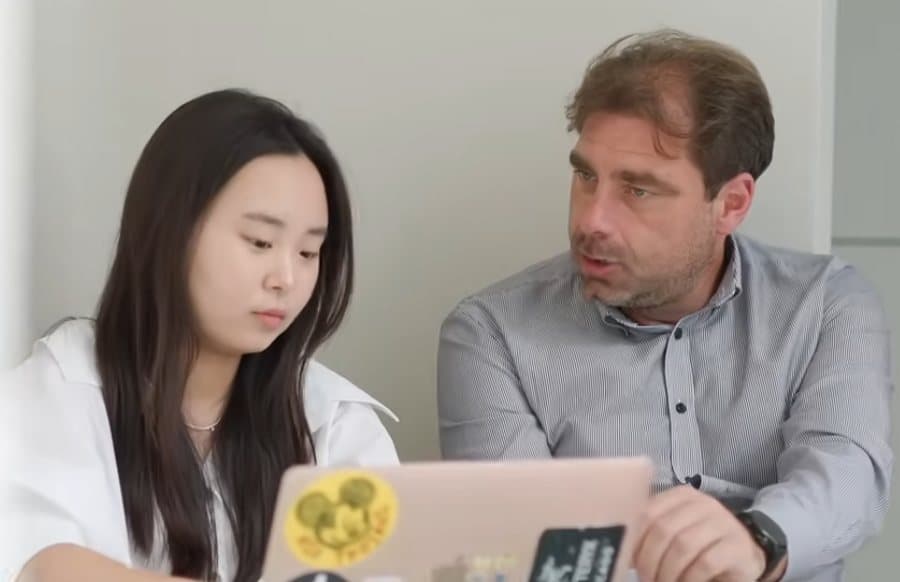
Orientation opened with a clear message: this was more than a paper-writing camp. Students could expect intensive one-on-one feedback from their professors, deep work on a demanding topic, and real growth as researchers along the way.
"Our goal is not just a good result, but real growth."
— CRI's CEO, speaking at orientation
Students nodded along, but the questions on their minds weren't hard to guess. How different will this be from the way I've studied until now? What will the professors tell us? Can I really write a research paper? With those questions still open, the first classes of SRP 2025 began.
Forty-five students, many different paths
The 2025 cohort brought together 45 students from around the world and from a wide range of backgrounds. Some attended boarding schools in the United States, and some flew in from long-established schools in the United Kingdom. Others studied at Korea's specialized and autonomous high schools, including science, gifted and foreign-language schools, and many came from international schools in Korea.
Their nationalities, schools and daily routines differed, but they had two things in common: they wanted to learn, and they weren't afraid to ask questions. The 45 were selected from a much larger pool of applicants, but the point was less the acceptance rate than who the seats were for: students who arrived prepared. They earned their places not just by being smart, but by showing the courage to push their own ideas and the humility to listen to others.
They had taken very different routes to get there. Now they sat in front of the same questions, each ready to find an answer in their own way.
When the classroom doors closed
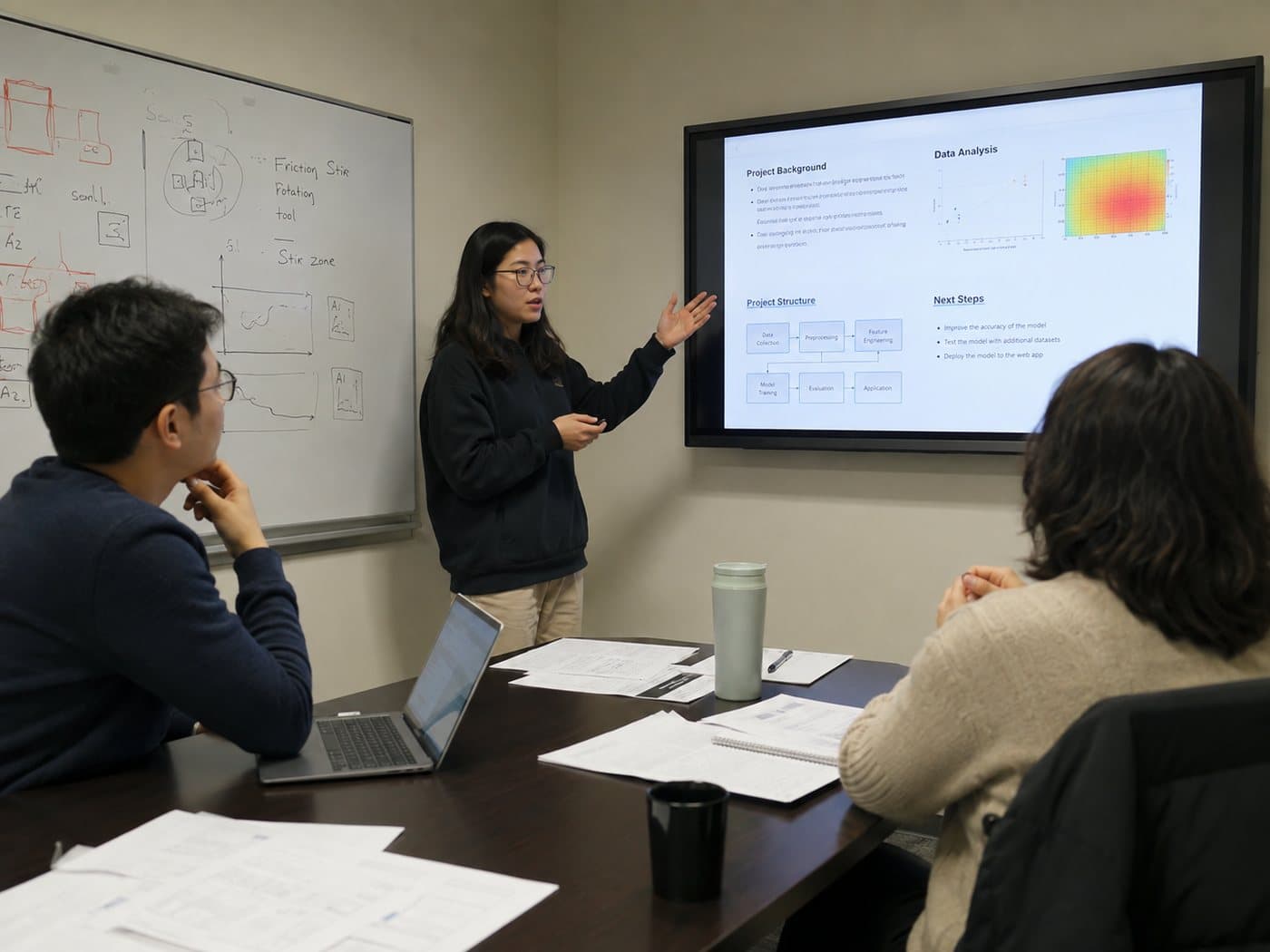
The doors shut, and a professor's first words quietly filled each room. The tone was serious from the start. Questions came fast, and students' notebooks filled with their thinking. In one classroom a dataset was up on screen for analysis; in others, international politics, brain science, algorithms and environmental finance sparked lively debate.
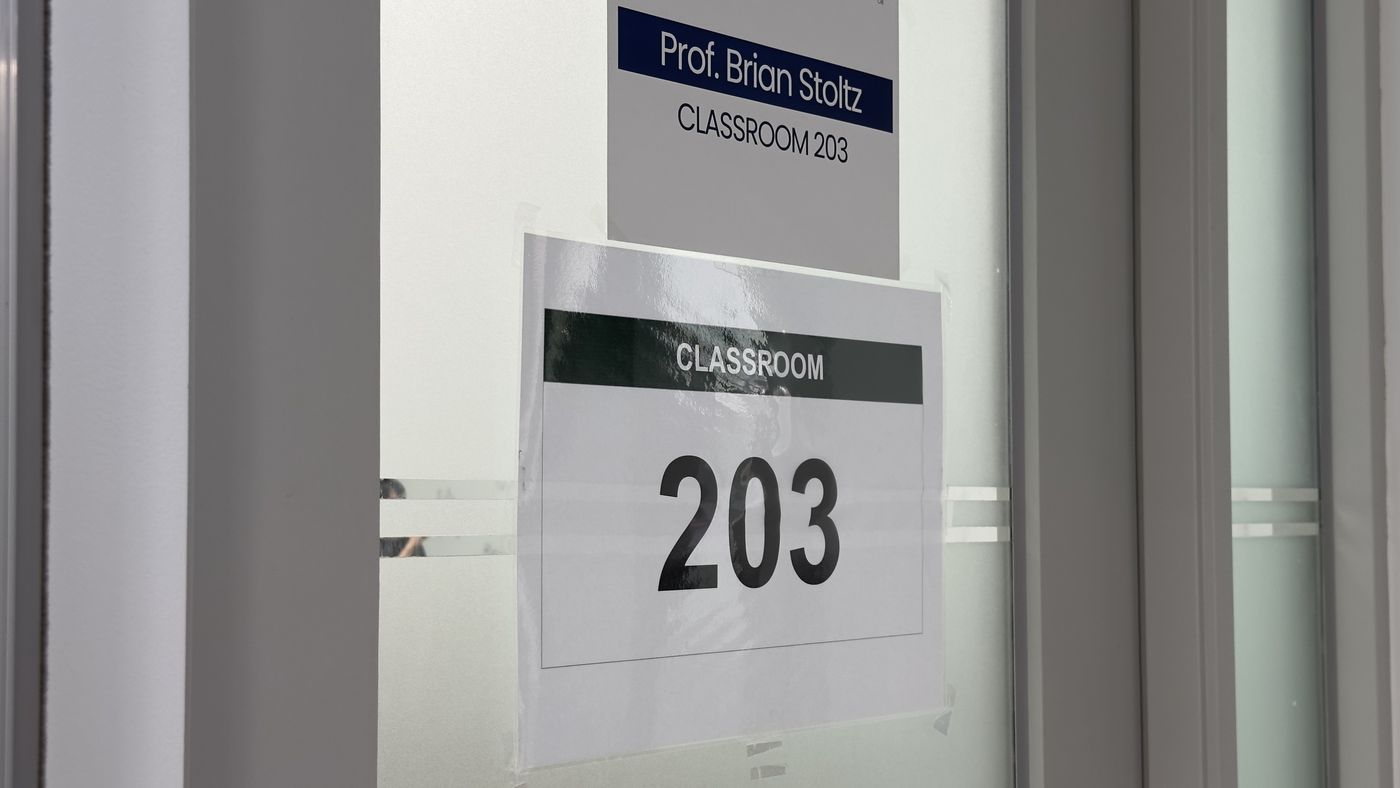
Caltech professor Brian Stoltz's classroom at SRP 2025
SRP is closer to thinking together than to sitting and listening. Students organize their own ideas first, and the professor pushes them to dig deeper. Every professor teaches differently, but they share one habit: they treat students not as pupils but as researchers. That changes the questions, the feedback and the expectations. Students may hesitate or get stuck, and that is exactly where learning deepens and research begins.
Only one class in, there was already a slightly different look in the students' eyes. A quiet intensity hung over every classroom, and new questions, ones that weren't there that morning, were appearing in their notes. This was not a lecture series. It was the start of writing a research paper together.
Why this summer is different
There is no shortage of summer programs that promise a paper, an admissions boost or competition prep. SRP starts somewhere else: whom you work with, how deep you go, and how much you change in the process. A strong final paper matters. The thinking that produces it, the experience of real feedback and the depth of the questions matter more.
The program is designed less as a place to absorb knowledge than as a chance to experience what being a researcher is like. That is why the professors see students as junior colleagues to work through problems with, not as people to be lectured. In that kind of relationship, a question stops being an assignment and becomes a tool for understanding the world.
SRP 2025 had only just taken its first step, and the CRI team was eager to see which classes, ideas and conversations the coming days would bring. To see current faculty and research tracks, explore the Seoul Research Program.