"I get that hotels cut back on housekeeping to help the environment. But why do some hotels give you points for skipping it?" That question about an ordinary hotel policy led Y. deep into economic theory. Working with Professor Ryan Fang of the University of Chicago in a CRI research program, he turned it into a full paper: "To Change Linen or Go Green: Hotel Housekeeping Service Offering as a Screening Problem." The finished paper, backed by a strong recommendation letter from Fang, went into Y.'s Early Decision application to New York University, and he was admitted.
A mentor in the economics of information
Fang works in game theory and information economics, the mathematical study of how what people know, and what they don't, shapes the choices they make. His research asks how the flow of information drives the decisions of individuals, firms and governments, and what economic equilibrium results. These are advanced topics even at the graduate level, and Fang's teaching demands that kind of rigor. He is also known for showing students how to connect the theory to real social behavior.
A problem of hidden information
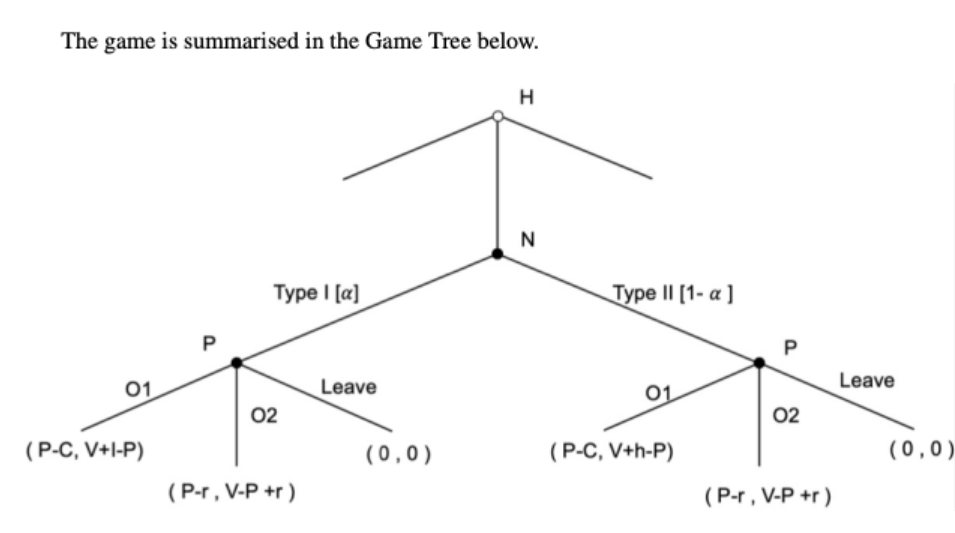
Y. began with a problem economists call asymmetric information. A hotel cannot see what each guest actually wants. Some guests want fresh sheets every day; others care more about the environment or their privacy. Each guest's true "type" is hidden, which leaves the hotel with a practical puzzle: how do you offer the best service when you don't know what your customers prefer?
His hypothesis was that cutting back on cleaning might be more than a cost-saving move. It could be a strategic tool for telling guests apart, a practice economists call screening.
Letting guests reveal themselves
In screening theory, a seller who can't observe a buyer's type designs a menu of options that leads buyers to sort themselves. Instead of offering every guest the same stay, the hotel in Y.'s model offers two:
- Option A: daily housekeeping at price P
- Option B: no housekeeping, plus a points reward r, for an effective price of P −