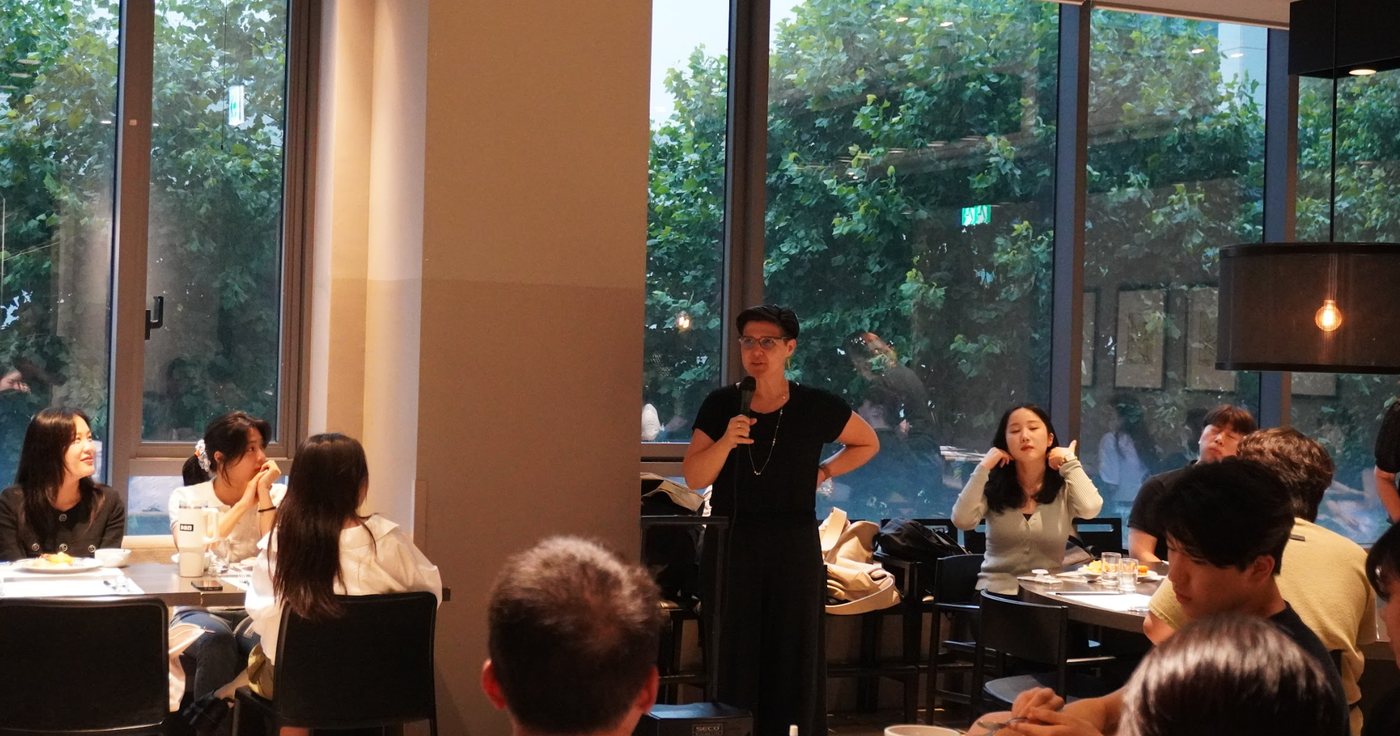
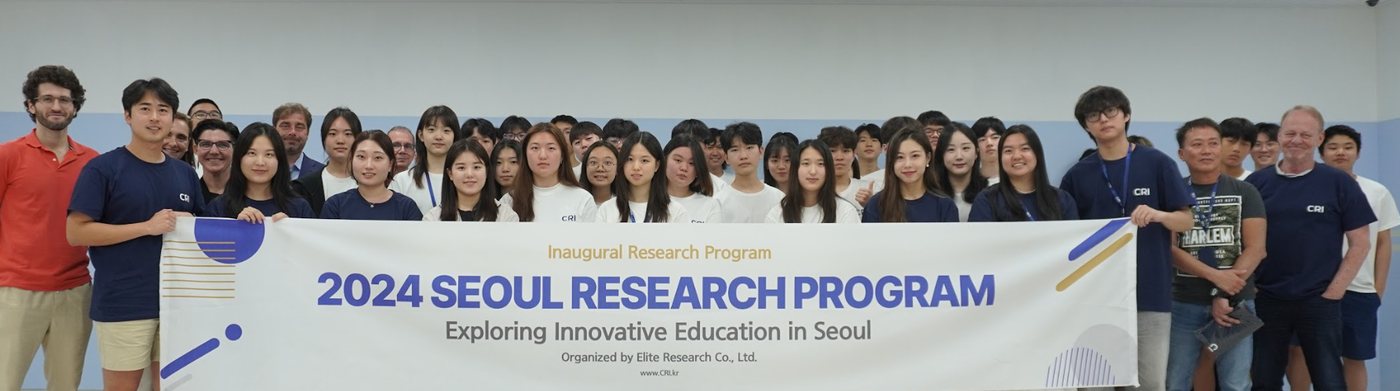
"What does learning usually feel like for you at school?" Professor Sarah Kavanagh of the University of Pennsylvania opened her class with that question on day one of the Seoul Research Program in summer 2024. Each high school student in the room had a different answer. One said they were used to being judged by test scores alone. Another said studying seemed to be about memorizing more than understanding. A third said teachers and students were both so busy that they sometimes forgot why they were learning at all.
That conversation turned into a research question: how does Korea's test-centered culture shape the way students experience learning? It is a topic everyone knows, yet one that has rarely been explored scientifically in any depth. By the end of the project, the team had written a systematic literature review on it, and the paper was published in a journal with the students as co-authors.
The professor behind the class
Sarah Schneider Kavanagh is an associate professor at Penn's Graduate School of Education (GSE) and director of the Collaboratory for Teaching and Teacher Education. She began her career teaching in secondary schools in California and Baltimore. Having seen the limits of teacher preparation firsthand, she has built her research around practice-based teacher education, looking past what teachers do in class to the reasoning and instructional strategies behind it.
She co-authored Core Practices for Project-Based Learning: A Guide for Teachers and Leaders (Harvard Education Press), which many US teacher training programs use as a text. Her work on teacher coaching, instructional practice and mentoring has been funded by Lucas Education Research, the Spencer Foundation and the McDonnell Foundation, and it reaches classrooms through partnerships with school districts, teacher training institutions and education nonprofits. She also leads TEDD (Teacher Education by Design), a teacher-learning platform used by school districts and teacher education programs in the US and abroad.