Four abstracts accepted as posters at IEEE EMBS BSN 2025, Los Angeles
Four student teams from Nabil Alshurafa's SRP 2025 class take sensor research to IEEE BSN
Four teams, SRP 2025 (Alshurafa class) Biomedical engineering (wearable health)
Does exercise actually relieve academic stress, or does it only feel that way? Three students who met for the first time at CRI's Seoul Research Program in summer 2025, each a different age and from a different place, decided to measure it. They built their own wearable sensors with Arduino, had participants work through SAT problems while wearing them, and compared what happened after ten minutes of running, meditating, or scrolling on a phone.
Their abstract was accepted at IEEE EMBS BSN 2025, the International Conference on Body Sensor Networks, held in Los Angeles on November 3–5, 2025. They were not the only ones. Four teams from Northwestern University professor Nabil Alshurafa's class that summer had abstracts accepted for poster presentation, which put high school researchers in front of graduate students and established scientists in wearable health.
A professor who studies behavior through sensors
Nabil Alshurafa is an associate professor at Northwestern's Feinberg School of Medicine and McCormick School of Engineering, where he co-directs the Center for Behavior and Health. A specialist in both preventive medicine and computer engineering, he works in behavioral sensing: using AI and sensor data to understand how people behave and to predict their health. His HABits Lab (Health Aware Bits Lab) uses AI to analyze eating, stress, sleep, and physical activity and to develop practical ways of managing health. His papers have won best-paper awards from ACM IMWUT and IEEE PerCom, and his research is funded by the National Institutes of Health, the National Science Foundation, and Google.
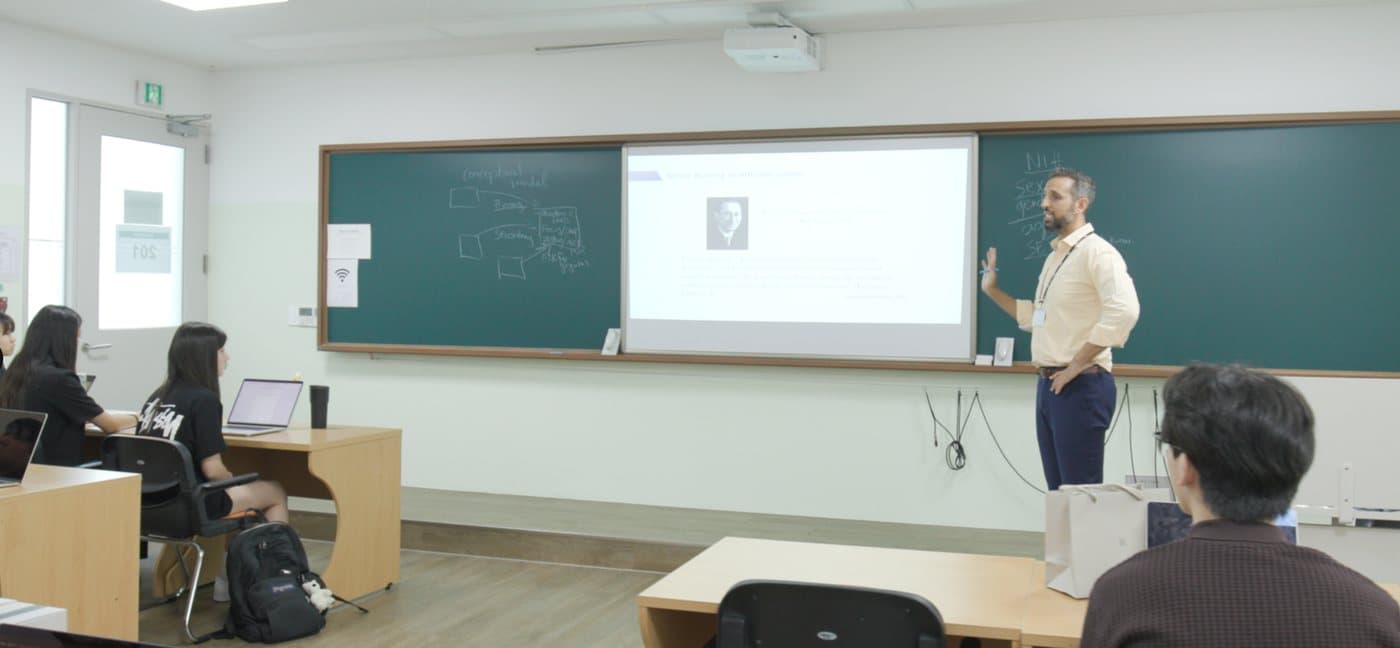
He designed his CRI course, Behavioral Medicine and Bioengineering in Mobile Health: Advancing Health Sensors and Technologies, around the sensors, data, and analysis methods his own lab uses. In effect, students spend ten days in a scaled-down version of a working lab, learning to study human health and behavior with wearable sensors.
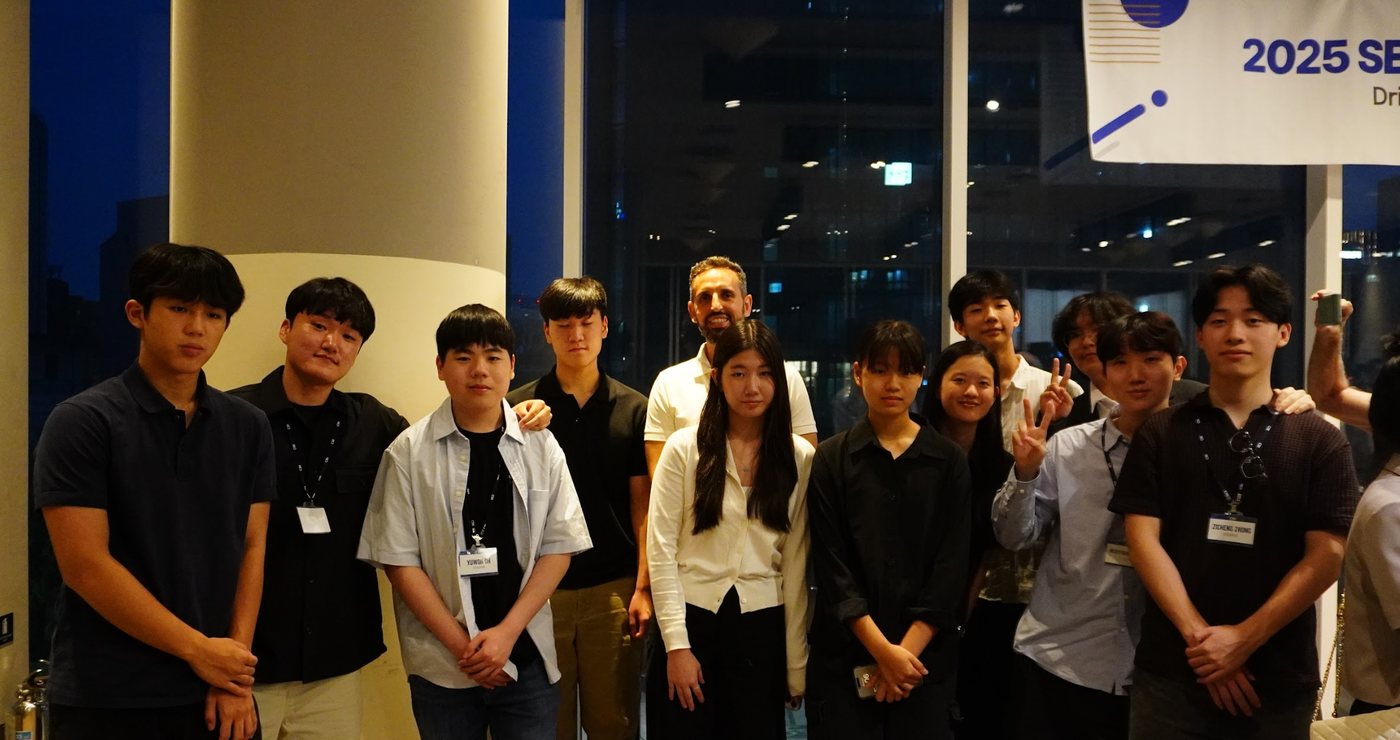
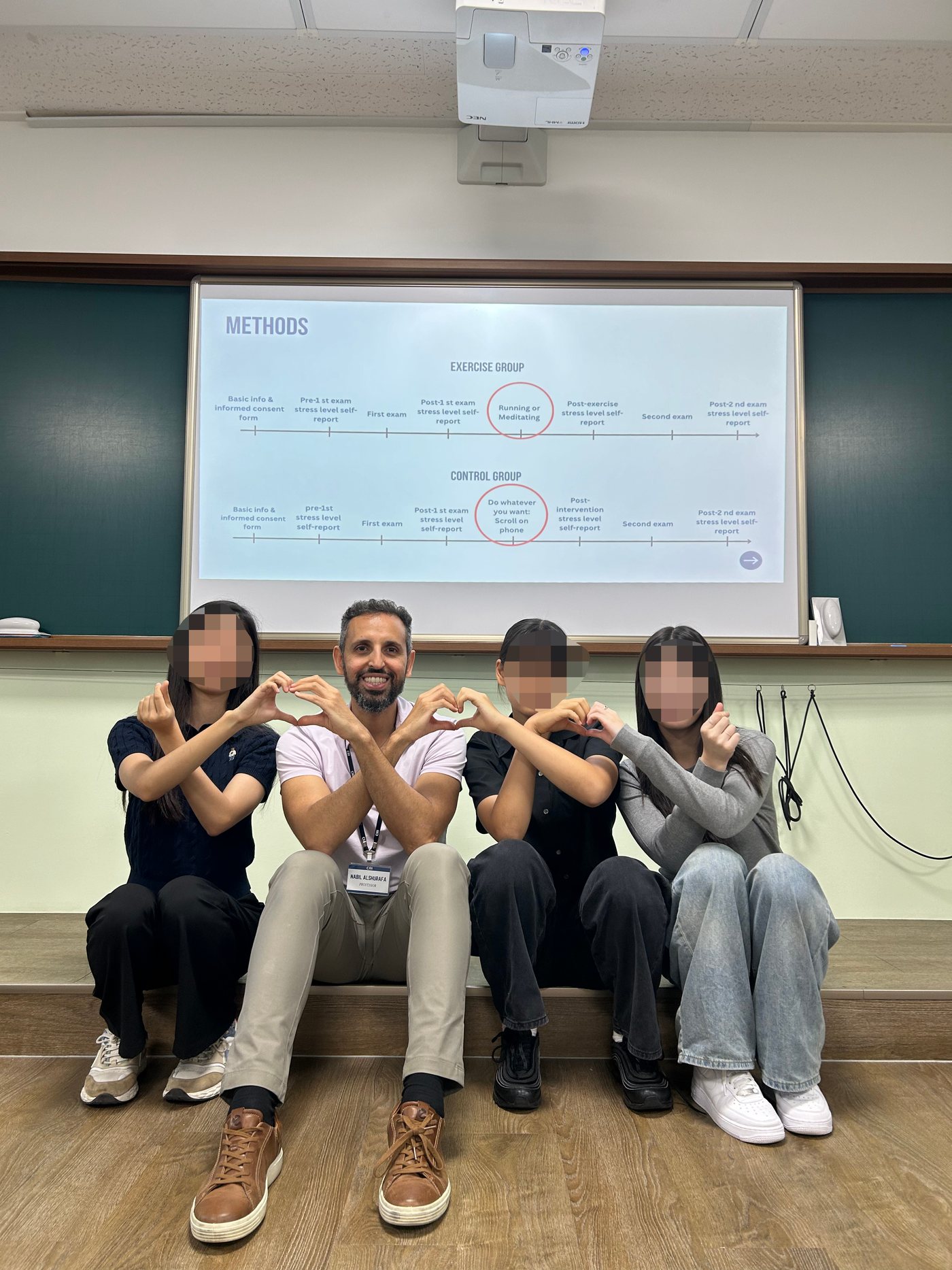
Professor Alshurafa with Seoul Research Program students, summer 2025.
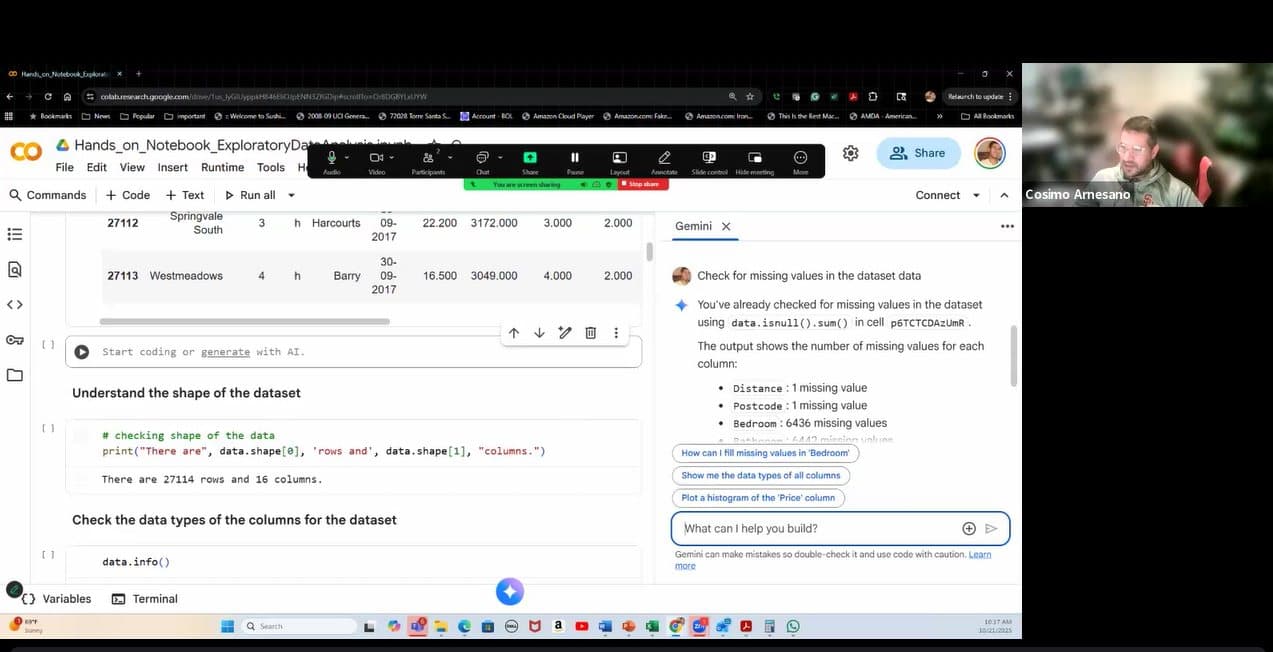
Ryugwang (Josh) Jang, a UC Berkeley student with research experience in biosignal processing and health data analysis, helped teams design experiments, debug code, and visualize results, pitching the analysis at a level high school students could own.
Wooyoung Kang, a computer science graduate student at NYU at the time of the program, with an undergraduate degree from HKUST, co-founded a startup that uses AI to detect strokes and took first place among some 1,500 competitors at Hong Kong Techathon+ 2024. He coached students through data analysis and AI modeling.
Both TAs ran the work the way projects run in the professor's lab, so students were doing research, not just learning about it.
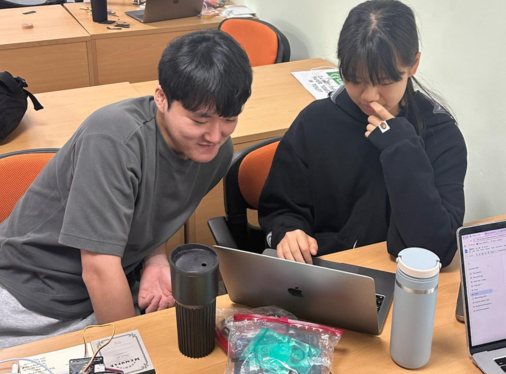
Working through the data together at a laptop.
Ten days, from sensor to poster
Days
Stage
What students did
1–3
Foundations
Learned how heart rate, galvanic skin response (GSR), blood glucose, and stress sensors work, and practiced reading what body data reveals about emotion and health
4–6
Question and design
Chose a research topic with Professor Alshurafa, then designed the experiment and the data collection themselves
7–9
Analysis and writing
Cleaned, analyzed, and visualized data in Python with TA support, then wrote the paper in Introduction, Methods, Results, and Discussion form
10
Presentation
Presented the finished paper to the professor in the format of a poster session at an international conference
The questions came from the students. Would caffeine sharpen their focus? Could exercise take the edge off test stress? Teams turned questions like these into experiments they could run within days.
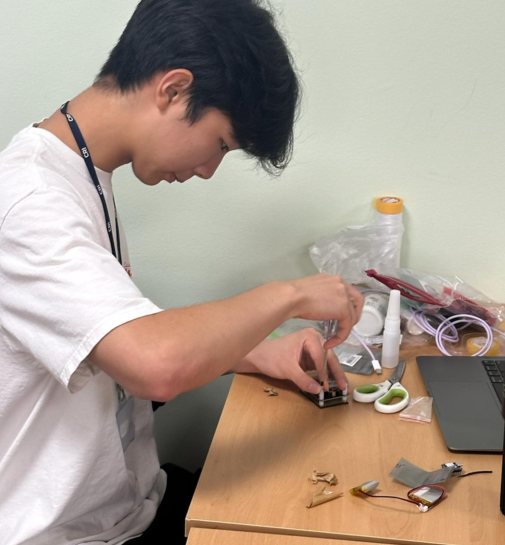
Assembling sensor hardware during the course.
Breaking the cycle of stress
The stress team started with little more than a broad interest in academic stress. Round after round of discussion with Professor Alshurafa narrowed it to a question they could test: does exercise really help relieve it?
Their study, "Breaking the Cycle of Stress: Exercise as a Regulator of Academic Pressure," followed 12 participants aged 15 to 19. They were split into three groups (running, meditation, and a control group that scrolled on their phones), each with equal numbers of athletes and non-athletes. Participants wore the sensors through two 20-minute exams of SAT problems, separated by a 10-minute intervention. The running group also had a 10-minute cooldown afterward so their heart rates could return to normal before the second exam. Stress was measured two ways:
Physiological stress: a PPG sensor on the earlobe tracked heart rate variability (HRV), and GSR sensors on two fingers tracked skin conductance.
Perceived stress: a short survey adapted from the PSS-4 stress scale, taken before the first exam, after it, after the intervention, and after the second exam.
The work brought repeated failures and rounds of revision, but the team saw it through to a finished paper.
The stress team with Professor Alshurafa and their study design.
Running came out ahead, with the largest drop in both self-reported and physiological stress: the running group's average self-rated stress fell from 3.00 to 1.25. On the survey, meditation left self-reported stress flat at about 2, and the phone group's score dipped only slightly, from 2.25 to 2.00. Taking the sensor and survey data together, the team ranked meditation second and found that phone scrolling changed little. They concluded that running is an effective, accessible way to manage exam stress, and that meditation is a good option when running is not practical.
"Just ten minutes of running, and I felt completely different."
— A participating student
In September 2025, the conference returned its decision on the paper: accept.
Three more questions, three more posters
All four papers use sensors to understand human behavior and health, and each team came at that goal from its own angle.
TurtleTrack: a wearable for "turtle neck"
Hours hunched over phones and laptops leave many teenagers with forward head posture, the "turtle neck" that gave this project its name. The team built a neck-worn device around an inertial measurement unit (IMU) that tracks the angle of the neck in real time and detects poor posture.
In a six-person pilot, the team compared an educational video alone with the video plus real-time nudges: whenever the device's LED flagged poor posture, a supervisor clapped. Time spent in poor posture fell sharply in both groups, from 29.8% to 0.5% with the video alone and from 61.65% to 6.25% with nudging added. The students concluded that the video did much of the work and that real-time nudging helped most for the participant with the most severe posture. Their next step is a smaller, less obtrusive device that replaces the human cue with automated feedback such as a vibration motor, aimed at practical use in habit correction and wellness technology.
Caffeine and concentration
"Does coffee really help you focus?" To find out, this team recruited 30 high school students from three schools. Each took a standardized focus test before and after a single serving of black coffee containing 180–210 mg of caffeine, while wearable sensors recorded heart rate (via PPG), skin conductance (GSR), and skin temperature.
The team saw a brief lift in concentration after caffeine, along with shifts in stress-related signals. The clearest was vascular: PPG amplitude dropped by an average of 14.2%, a sign of blood vessels constricting, and the drop was consistent across participants. On average, HRV fell 7.4% and skin conductance rose 6.8%, though heart rate and skin conductance responses varied from person to person. The team sees the data as groundwork for guidance on healthy caffeine use among teenagers.
A breath test for gum disease
Could gum disease be detected from breath alone, without a visit to the clinic? This team paired a sensor that measures volatile sulfur compounds (VSCs), the main cause of bad breath, with machine-learning models such as Random Forest and Gradient Boosting to classify disease severity. The models were trained on de-identified records from a dental clinic in Korea, then tested on 11 participants who breathed into the sensor.
In that external test, the model reached 91% accuracy and an AUC of 1.00. The students present it as evidence that a low-cost screening tool is feasible, and they flag the small sample themselves. They plan to extend the study to larger groups, including through a collaboration with a Korean dental hospital.
Why BSN matters
BSN is organized under the IEEE Engineering in Medicine and Biology Society (EMBS) and is one of the leading international meetings for wearable sensors, healthcare AI, and biosignal analysis. It brings together researchers from institutions such as MIT, Northwestern, KAIST, UCLA, USC, Google, and DARPA, along with graduate students and medical-device companies. For these students, acceptance meant that work begun in a ten-day summer course had been reviewed and judged ready for that community.
"Seeing data that students created presented at an international conference shows the direction research education should truly take."
— Nabil Alshurafa, Northwestern University
The result belongs to the students. They chose the questions, designed the experiments, and kept revising until the papers were done; CRI's role was to open the path and support them along it. They were not Professor Alshurafa's only students at BSN 2025, either: a student in CRI's 1-on-1 program presented a rehabilitation wearable for runners, a story you can read on our Student Success page.
Professor Alshurafa's wearable-health course is part of the Seoul Research Program, where small groups work directly with visiting professors, design their own studies, and write their papers in English, with CRI supporting each manuscript through submission.