Paper-writing guide, part 6: finding, citing and managing your sources
Citations are part of research design, not a last-minute chore. Learn how to search the literature, judge what you find and let a reference manager handle the formatting.
"Don't you just add the references at the end?" First-time authors ask this all the time. They write the whole draft, leave gaps marked [1] and [2], then rush to find papers that seem to fit. But citations are not a formality for filling out a reference list. They are part of the research design, work that begins before you write a word, and they carry much of a paper's credibility and persuasive force.
A good paper answers two questions at once: what new thing am I saying, and why have I earned the right to say it? The literature search is what earns you that right. This sixth part of CRI's seven-part paper-writing guide covers why citations matter, how to run a literature search, and which tools keep your references under control.
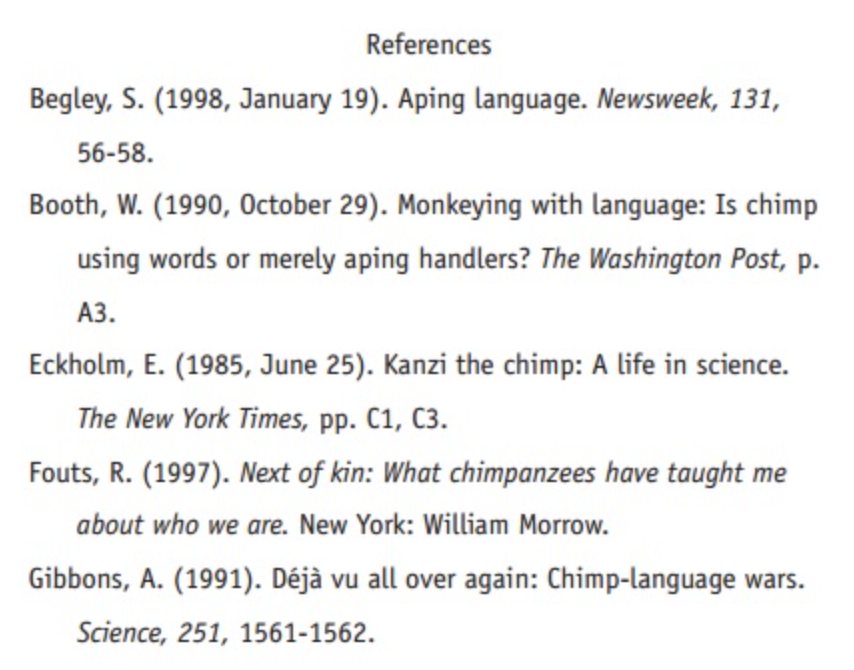
A reference list in APA style: every entry follows the same pattern of author, date, title and source.
Three reasons citations matter
A literature search shapes every stage of a paper, from planning and design to carrying out the work and interpreting it. Beginners tend to ask, "Why do I have to cite this?" The better question is, "Will my argument still convince anyone if I don't?"
To show that your idea is new. Someone may already have answered your question. If so, cite that paper and explain how your work goes further. Skip this and a reviewer will ask the obvious question: how is this different from what's already out there?
To borrow designs and analyses that have already been tested. Few people invent a perfect experimental design from scratch, so the quickest route is to see what similar studies did. If you hypothesize that gene A affects a particular disease, earlier work shows how others measured that gene's expression and under what conditions they found significant differences. Your study becomes both more valid and more feasible.
To give your discussion depth. Sooner or later every paper needs a sentence like "Our results agree with X but differ from Y." Citations build those links, show where your findings sit and let you spell out what they imply.
Have a question you want to investigate?
Explore our faculty-guided programs, or tell admissions what you are curious about.
A good paper is not a standalone text but an argument built on existing knowledge. Citations are its first building material, and the literature search is how you choose them.
The search itself: question, keywords, search, organize
The most common complaint at the start is simple: "I don't know what to search for." Finding papers is often harder than reading them, so break the search into four steps.
1. Sharpen the question
Every search starts from what you want to know, so write down a specific research question rather than a broad interest. "Environmental pollution affects human health" is far too wide. "How does fine dust affect children's lung function?" is something you can actually search. The more specific the question, the more precise the results.
2. Pull out the keywords
Pick out the core concepts in your question and list the terms researchers use for each, synonyms included. If you think about your topic in another language, this is also the moment to translate it into English.
Concept
Search terms
Fine dust
particulate matter, PM2.5
Children
children, pediatric
Lung function
lung function, respiratory health
Keep the terms broad at first and try them in different combinations.
3. Use the right search tools
Platform
What it's good for
Google Scholar
The most accessible option for beginners. Start here.
PubMed
Life sciences and medicine, with generally reliable sources
Web of Science
Advanced features such as subject filters and citation counts
Semantic Scholar
Intuitive AI-based summaries, graphs and citation analysis
Begin with Google Scholar, then widen the search in PubMed or Web of Science. Each result shows the title, authors, year and a "Cited by" count, a useful signal of a paper's influence. As a rough guide:
100+ citations: a landmark paper, a reference point for theory or experiments in its field
50+ citations: an influential paper most researchers in the area know
10+ citations: credible work the field has taken seriously
0–5 citations: a recent paper, or one whose influence hasn't spread yet, so read it with extra care
A low count doesn't make a paper worthless. Early in a project, though, starting with the most-cited work is safer and more efficient.
4. Organize as you go
A search can turn up dozens of papers, so decide how you'll organize them before you read. Skim titles and abstracts to build a shortlist, then save the papers you care about in a reference manager such as Zotero, Mendeley or EndNote, which stores each PDF alongside your notes, keywords and citation details.
What matters most is not how many papers you read but whether you record and summarize them. Papers you only read fade quickly. As you go, jot down the main point, the methods and any sentences you might cite.
Follow the citation network
Citations trace the lineage of ideas and the flow of influence in a field. Every paper builds on earlier work and is later cited by others, so papers link to one another like a network.
Make a habit of asking who was influenced by the papers you cite. If paper A is cited by studies B and C, A is shaping the field. Follow that trail and you start to see the key concepts, the leading researchers and where the field is heading. Several tools make these links visible:
Web of Science lays out a paper's citation network as a tree.
Semantic Scholar has a Citations tab on each paper that shows the work that followed.
Connected Papers takes a single paper and draws a graph of similar papers and how they cite one another.
Tracing these connections moves you from someone who has read a few papers to a researcher who understands how a field's knowledge fits together.
Journal and researcher metrics, briefly
Beginners often ask how well regarded a paper's journal is. The usual yardstick is the Impact Factor, which measures how often a journal's recent papers are cited. A 2024 Impact Factor of 32 means that papers the journal published in 2022 and 2023 were cited an average of 32 times in 2024. Nature Photonics, at about 32, is very high; the Journal of Consumer Research, at roughly 4 to 6, ranks high for the social sciences.
Remember that it is an average. A few papers may be cited hundreds of times while others are barely cited, so a high Impact Factor doesn't mean every paper in the journal is excellent. For individual researchers, the common measure is the h-index: an h-index of 10 means 10 of their papers have each been cited at least 10 times. It reflects both productivity and influence, so it often figures in faculty hiring and funding decisions.
To judge a paper well, look beyond the journal: weigh the paper's own citation count, its content and design, and the author's track record. The CRI blog has a separate guide to journal metrics, from the Impact Factor to CiteScore, SJR and SNIP.
Start with review papers
When you're new to a topic, it's hard to know which papers to read first or what really matters. The best starting point is a review paper, an article that surveys a topic's research and its key studies. Think of it as a map of the field. A good review:
lays out the core theories and open questions
shows which methods are most common and where the debates are
spares you from reading a huge stack of papers one by one at the outset
Several journal families specialize in reviews:
Review series
What it offers
Annual Review series
Flagship review journals by field, such as the Annual Review of Neuroscience
Trends series
Review-focused journals that quickly cover current issues, such as Trends in Cognitive Sciences
Nature Reviews series
Among the most influential review journals in the natural sciences
Papers with "review," "meta-analysis" or "survey" in the title are usually reviews, and adding "review" to your Google Scholar or PubMed search will surface more of them. If you're moving into a new area, such as AI-assisted cancer diagnosis, read the reviews before you plan any experiments. They show which methods have been tried, where those methods fall short and where the research is going. A single paper shows you one path. A review shows you the whole forest.
Never cite by hand
Few parts of a paper cause as many needless mistakes as the citations and reference list: typing (author, year) over and over, numbering, reordering, renumbering. Journals sometimes turn a manuscript away simply because the references are in the wrong format. So follow one rule: citations are not done by hand.
Almost every researcher now uses a reference manager. The three most common:
EndNote: paid but powerful, and many schools and institutions provide a license
Mendeley: free, with an intuitive interface and cloud storage
Zotero: free, with strong browser integration
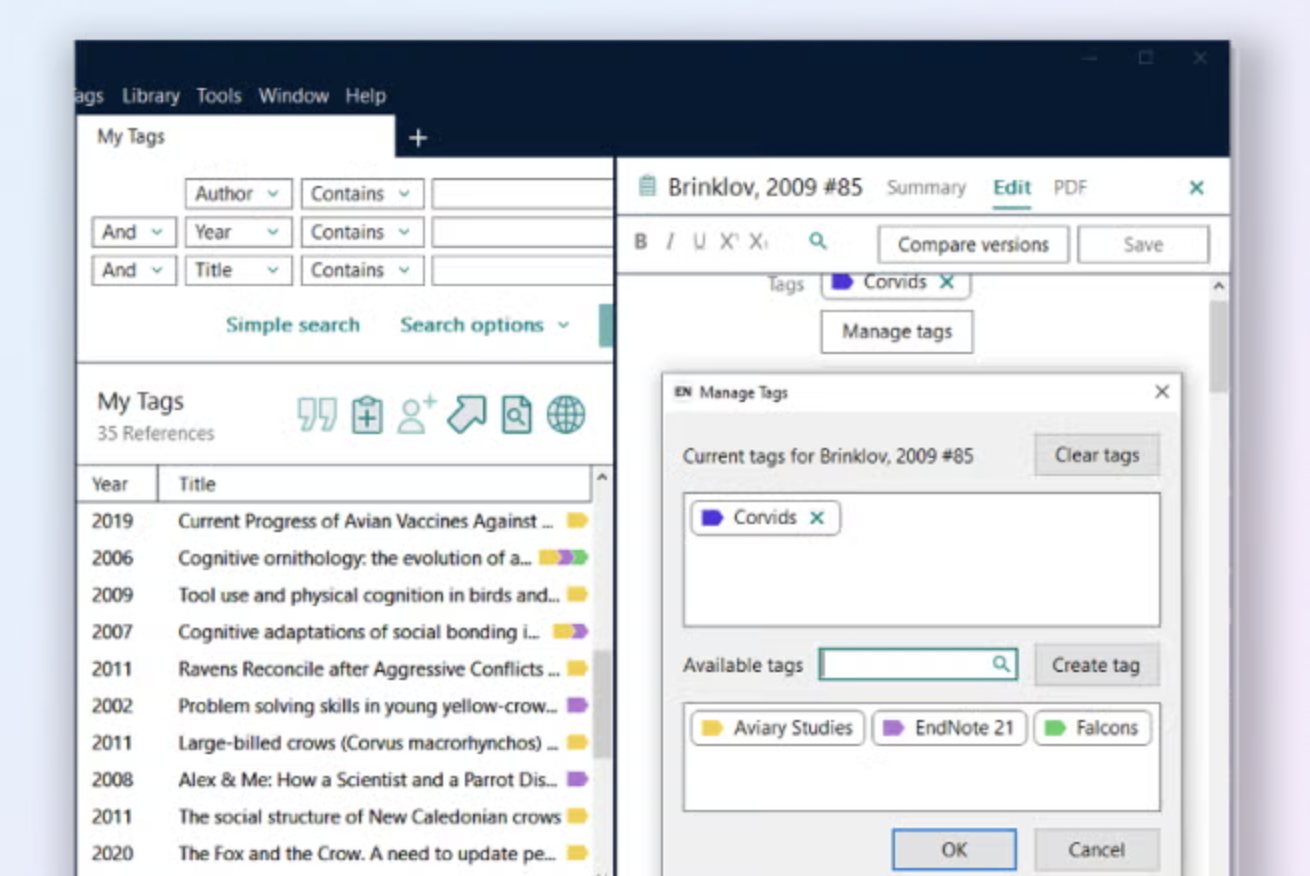
A reference manager keeps every source in one searchable library, with tags to sort papers by topic.
Reference managers pair neatly with Google Scholar. Click the quotation-mark Cite icon on a search result, download the citation in a format your reference manager can import (such as a .ris file), and the reference is in your library within seconds. Installing EndNote also adds an EndNote tab to Microsoft Word, where Insert Citation drops a citation straight into your text. Beyond that, a reference manager takes over the tedious work:
Style conversion. Moving to another journal no longer means reformatting every reference. One click switches the style from Nature to APA to IEEE, which takes much of the pain out of resubmission.
Numbering and order. Add a citation mid-draft and the whole list reorders and renumbers itself, with no numbering errors, duplicates or omissions.
Collaboration. On a paper with several authors, a shared library lets everyone see each other's citations in real time and keeps the references consistent, which means fewer clashes and cleaner version control.
One home for your sources. PDFs, notes and topic folders all live in one place, so organizing your reading no longer takes separate time.
A reference manager automates the formatting so you can focus on the content. Once you've used one, writing a paper without it feels like doing math without a calculator. Doing citations by hand to save time usually costs you both time and quality.
Plan your citations before you write
Many students only deal with citations once the draft is finished. That's like building a house without a blueprint and only then starting on the wiring.
A strong paper settles a few things before the writing begins: which literature it will build on, which claims in the field it will challenge and whose work it will cite to earn the reader's trust. The more solid that plan, the more logical the structure, the more persuasive the argument and the more trustworthy the finished paper.
Do this now:
If you don't have a reference manager yet, install one today.
Search for review papers on your topic and add three papers to your library.
Open Word, click Insert Citation and add a citation yourself.
Efficient writing starts with the right tools, and a paper's depth shows in its citations. Part 7, the last in this series, turns to proofreading.
In CRI's 1-on-1 Advanced Research Program, students put these habits to work on a paper of their own: they write the manuscript in English under a faculty mentor's guidance, and CRI supports the paper through journal submission.