Who controls the rare earth magnets in your phone? Research with UN trade data
China makes almost 95% of the world's permanent magnets. Free UN trade data lets you trace how magnet shipments changed after its 2025 export licenses.
"My phone, earbuds and laptop share rare metals." You may have heard a line like that in a science class or a news story and then moved on. Push on it a little, though, and a harder question appears: what happens when one country controls most of those metals and decides to use that control?
In 2025 that stopped being a thought experiment. It's also a question you can start to answer yourself, with free public data and a spreadsheet.
The tiny magnets that make your phone buzz
Rare earths are a group of 17 metallic elements. One of them, neodymium, goes into the magnets that let your phone's speaker play music and its vibration motor buzz when a message arrives, according to the U.S. Geological Survey. These are permanent magnets, which stay magnetic without an electric current.
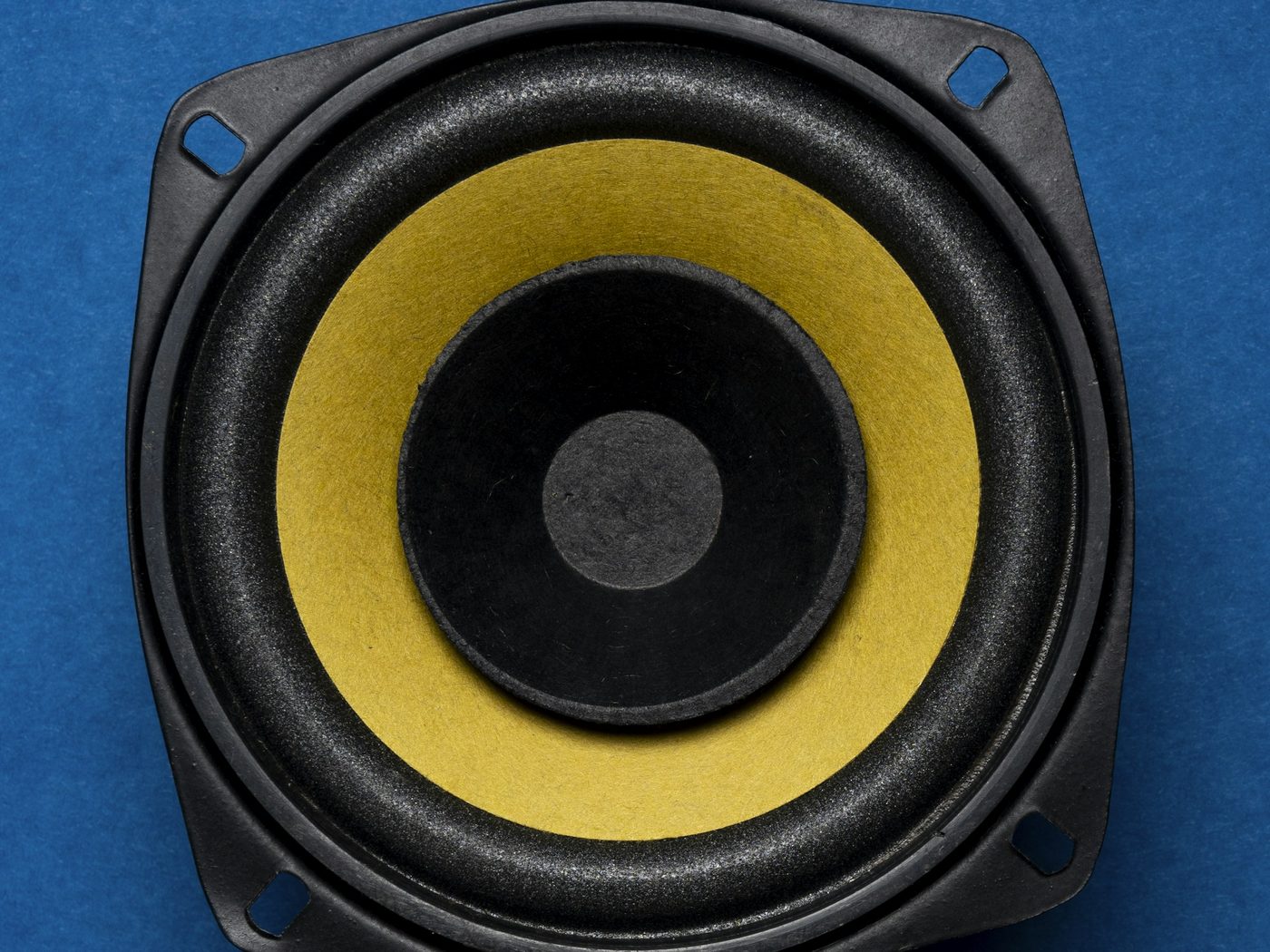
A speaker like this one uses a magnet to turn an electric signal into sound, and in a smartphone that magnet is tiny and contains neodymium, a rare earth element.
Larger technologies need rare earths too: the International Energy Agency (IEA) names electric vehicles, AI data centers, robotics and defense systems. It reports that demand for the main "magnet rare earths" (neodymium, praseodymium, dysprosium and terbium) has doubled since 2015.
To get from rock to magnet, rare earths go through three main steps. The ore is mined. Then it's refined, which means separating the mixed elements and purifying each one. Finally the metals are made into magnets. Here's China's share at each step, from the IEA:
Step
China's share of world output
Mining of magnet rare earths
around 60%
Refining
above 90%
Making permanent magnets
Have a question you want to investigate?
Explore our faculty-guided programs, or tell admissions what you are curious about.
So the tightest bottleneck isn't the mine. It's the refinery, and the magnet factory after it. The IEA calls refining and magnet manufacturing "key bottlenecks." A new mine elsewhere helps less than you'd expect, because its ore still has to pass through those two steps.
Testing whether a chokepoint gives power
To a political scientist, a position like this is a possible source of power. If you control something others need and can't quickly replace, you can raise their costs by slowing the supply. In a 2019 paper in International Security, Henry Farrell and Abraham Newman described how states "weaponize interdependence," including a "chokepoint effect": a state with control over a central hub in a network can deny others access to it. Their cases were the SWIFT financial messaging system and the internet, not minerals, but the same logic can be applied to a supply chain with one dominant hub.
Holding a chokepoint and getting results from it are two different things, and that gap is what you test. A good test needs a clear moment when the power was used, and rare earths have one. On April 4, 2025, China's Ministry of Commerce placed export restrictions on seven medium and heavy rare earths (samarium, gadolinium, terbium, dysprosium, lutetium, scandium and yttrium) and on some magnets that contain them. Analysts at the Center for Strategic and International Studies (CSIS) pointed out that this wasn't a ban. Exporters had to apply for a license, and CSIS expected a pause in exports while the licensing system was set up.
That date gives you a before-and-after design. If the license rule really slowed supply, shipments should drop after April 2025, maybe more for some buyers than others, then recover as licenses came through. The first monthly figures showed a dip. China's rare earth exports fell 16% from March to April 2025, to 4,785 tons, though that was still higher than a year earlier (Bloomberg News, published by MINING.COM). The open questions: which buyers were hit hardest, and for how long?
China's share, by the IEA's 2026 numbers
A recent picture of this concentration comes from an IEA report published in April 2026, Rare Earth Elements: pathways to secure and diversified supply chains. Its most striking number: China makes almost 95% of the world's permanent magnets. Two decades ago, the report notes, it made only around half.
By 2035, the IEA expects existing and announced projects to cover only around half of mining requirements, a quarter of refining needs and less than a fifth of magnet demand outside China. It adds that China's 2025 export controls caused significant short-term disruptions, and some manufacturers outside China had to cut production, although flows later recovered.
Permanent magnets come in many shapes and sizes, and the IEA reports that China makes almost 95% of them.
One honest limit: it's a policy report, not an experiment. Its percentages are estimates of market shares, so they show how concentrated supply is. They don't measure how much that concentration changes what other countries can do, and that's the gap a student project can work on.
Try it yourself with free trade data
Everything below uses public data, so there are no surveys or participants to arrange. Plan on four to six weeks of part-time work.
Step 1: Open UN Comtrade (about an hour).UN Comtrade is the United Nations database of international trade by country, product, and month or year. You can preview data without an account, but downloading files needs a free registration (how access works).
Step 2: Find magnet trade under HS 850511 (one to two hours). Customs offices around the world sort goods with the Harmonized System (HS), a shared list of six-digit product codes. Code 850511 covers permanent magnets made of metal, plus metal pieces meant to become magnets. Know its limit: it includes all metal permanent magnets, not only rare earth ones, so not everything in it fell under the April 2025 rules. Six digits is also the most detailed level that all countries share. Treat the code as a close stand-in and say so in your paper. Comtrade gives both the value in U.S. dollars and the net weight in kilograms. Track weight, because prices can change too.
Plan around one data gap. When we checked in November 2026, China's own monthly figures for 2025 weren't in Comtrade yet, though its 2025 yearly total was. The fix is "mirror data": the imports other countries report from China. Korea, Japan and the United States all had monthly 2025 figures for this code. Mirror data won't match China's own numbers exactly. Imports are recorded by country of origin, and goods shipped in one month can arrive in the next (why the numbers differ).
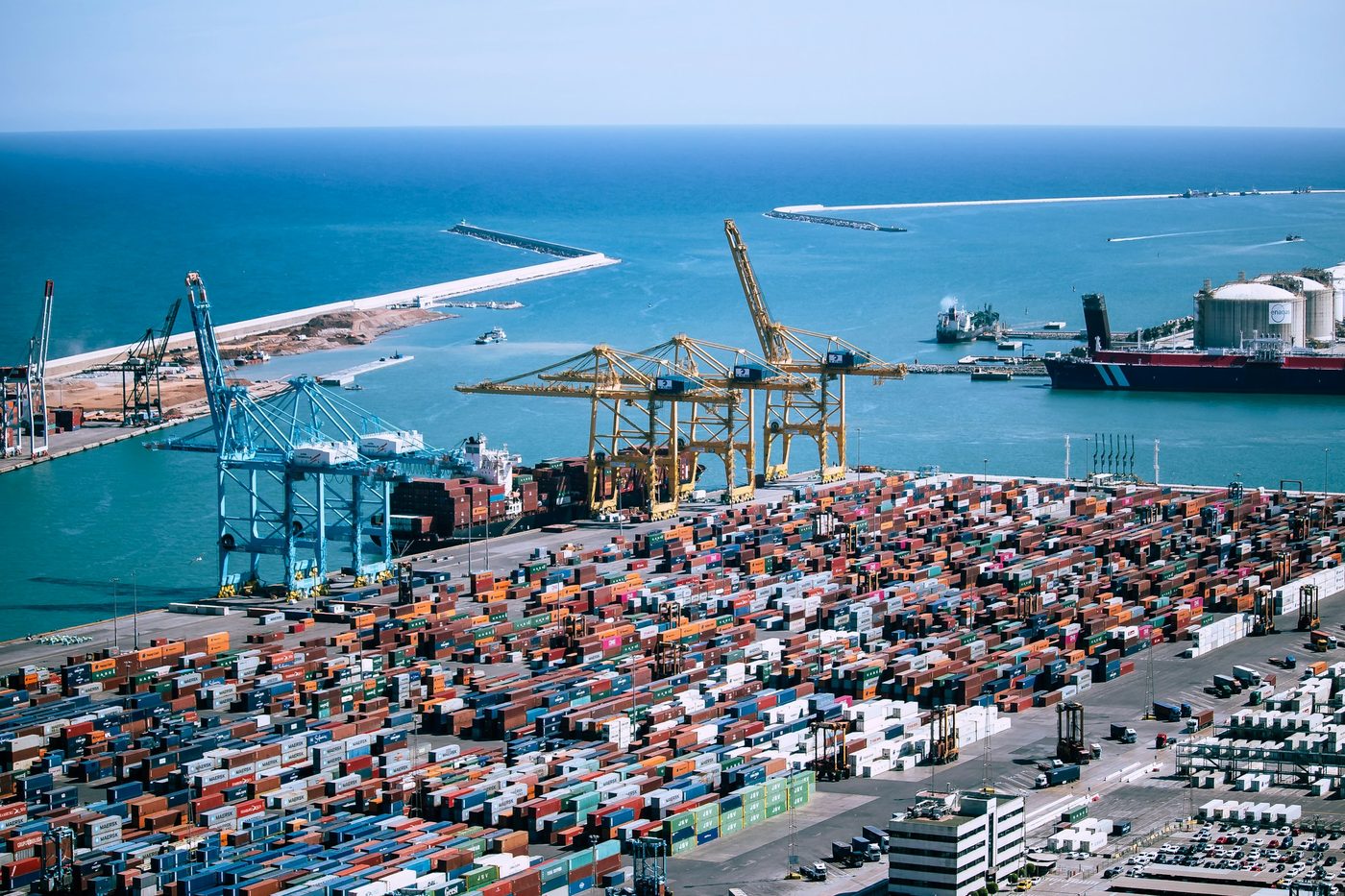
Customs records of goods crossing borders, added up by product, country and month, become the trade data you download from UN Comtrade.
Step 3: Mark April 2025 on a timeline (one afternoon). Download one country's monthly magnet imports from China, from January 2024 to the latest month available. Put them in Google Sheets and draw a line chart with a marker at April 2025. Compare each month with the same month a year earlier, because trade rises and falls with the seasons.
Korea reported importing about 561 metric tons of HS 850511 magnets from China in March 2025, about 392 in April and about 152 in May. A year earlier, April and May 2024 were about 583 and 750. By July 2025 the figure was back to about 546, close to July 2024's 574. That's a pattern to explain, not a finding yet. April 2025 also brought a sharp rise in U.S.-China tariffs, and one country's numbers can't prove what caused a dip.
Step 4: Compare which countries were hit (one to two weeks). Repeat step 3 for several importing countries. For each, work out the size of the drop and how many months it took to get back to the 2024 level, then put the results in one table. Now bring the political science back: CSIS noted that a licensing system could push countries to cooperate with China to keep their supply flowing, so check whether some buyers got back to normal faster than others. Choose one simple way to group countries, such as whether they are U.S. treaty allies, before you look at the numbers. With only a few countries, treat any pattern as a clue, not proof.
For students in Korea, the Korea Customs Service publishes the country's own monthly trade statistics at tradedata.go.kr, in Korean with an English menu. Use it to check the Korean figures from Comtrade.
The output is a line chart with April 2025 marked, a table of drops and recovery times by country, and a short paper of about 6 to 10 pages or a research poster. A strong version says what the pattern shows and is just as clear about what it can't show.
One product code instead of a big worry
No single project can answer a big question. A trade-data project should fit one product code, a time window and a comparison you can measure.
Too big
Workable
Does China control the world through rare earths?
How far did Korea's reported HS 850511 imports from China fall in April to June 2025 versus the same months of 2024, and when did they recover?
Are export controls an effective weapon?
Of Korea, Japan and the United States, which saw the largest percentage drop in magnet imports from China after April 2025, and which recovered first?
How can the world stop depending on China?
Did Korea import more HS 850511 magnets from countries other than China in mid-2025, which could suggest buyers were looking for other suppliers?
A review or a proposal on the same question
Trade figures are one kind of evidence; published research is another. A literature review weighs that research to answer a question, such as how researchers have tested whether controlling a mineral supply changes what other countries do, and how their methods differ. Start with Google Scholar and JSTOR, and on Google Scholar use the "Cited by" link under the Farrell and Newman paper to find later studies that cite it. A research proposal works out a study that depends on access to private records. For example: how did Korean companies that buy magnets react to the April 2025 licenses? Did they stockpile, switch suppliers or cut production? You would plan interviews with purchasing managers and ask the companies for their import records, which aren't published. The interviews would need approval from a research ethics board. All three are research papers on the same question: does a chokepoint give power?
Back to the device on your desk
With the trade data, start with one product code and one country, then add more countries. Even "the data can't tell us yet" is a real answer.
Your phone was the question. Now research it.
If questions about resources and power interest you, Sebastian Rosato, Professor of Political Science at the University of Notre Dame, leads Climate Geopolitics: The Green Race, Energy Security, and Great Power Competition in CRI's Winter Online Research Program, where each student writes their own paper in one of three forms: original research, a literature review or a research proposal. It runs online from December 19 to 30, 2026, with up to 5 students, and applications close December 15.
Sources
Baskaran, G., & Schwartz, M. (2025, April 14). The consequences of China's new rare earths export restrictions. Center for Strategic and International Studies. link
Bloomberg News (2025, May 9). China's rare earth exports drop as trade war crimps supply. MINING.COM. link
Farrell, H., & Newman, A. L. (2019). Weaponized interdependence: How global economic networks shape state coercion. International Security, 44(1), 42-79. link
Google Scholar. Search engine for academic papers. link
International Energy Agency (2026, April). New projects, partnerships and policies are needed to address supply chain risks for rare earth elements (press release for the report Rare Earth Elements: pathways to secure and diversified supply chains). IEA. link. Full text republished by CleanTechnica (2026, April 17). link
Korea Customs Service. Trade Statistics (in Korean, with an English menu). link
United Nations Statistics Division. UN Comtrade database: HS 850511, monthly imports from China reported by the Republic of Korea, Japan and the United States, 2024-2025, and China's reported exports (accessed November 2026). link
UN Comtrade Help Center. Bilateral asymmetries. link
UN Comtrade Help Center. How to access UN Comtrade data. link
World Customs Organization. What is the Harmonized System (HS)? link
U.S. Geological Survey, Office of Communications (2017, April 4). Ordinary minerals give smartphones extraordinary capabilities. USGS. link