Can ten years of violin change your brain? Research without an MRI
In a 2009 study, children's brains changed more with keyboard lessons than without. Compare players and non-players on pitch memory with a free online test.
"I've played the violin for ten years." You may have said it yourself when someone asked what you do after school. That can mean thousands of hours of scales and rehearsals. So it's fair to ask: can music really change your brain?
Part of the answer is in published research, and part is still open. A student paper can start from either one.
Ten years of practice: does it show in your brain?
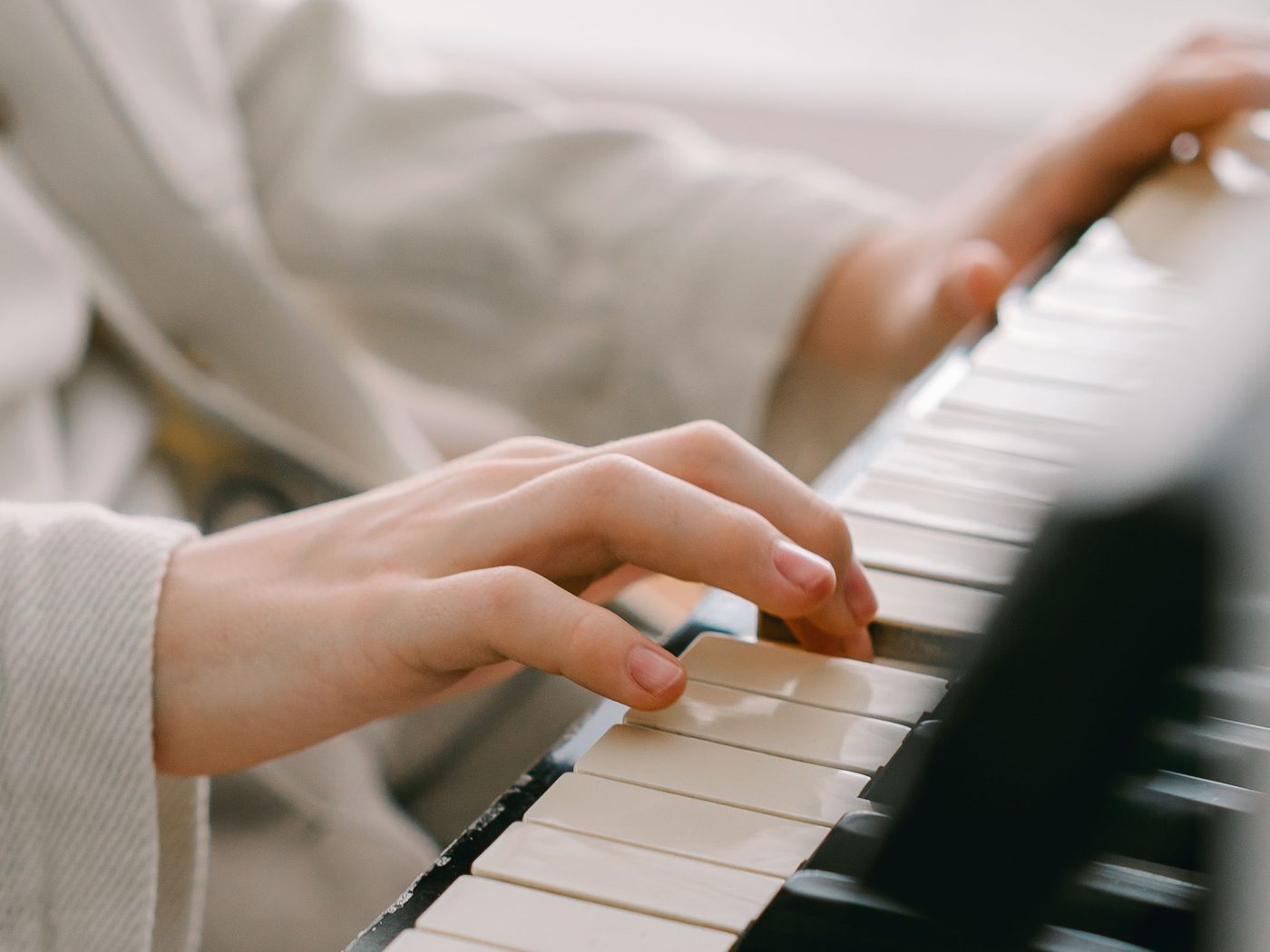
Your left hand presses strings on a fingerboard with no frets, so there's no fixed spot for each note. You find the pitch by listening and moving a finger a tiny distance. Your fingers play, but your brain does the learning. It plans each movement, then uses what you just heard to correct the next note.
Scientists call the brain's ability to change with experience neuroplasticity. Studies comparing adult musicians with matched non-musicians have found differences in brain areas for movement and for sound.
Those comparisons leave a puzzle. Maybe years of practice changed the musicians' brains. Or maybe children who started with certain brain features found music easier, so they kept playing while others quit. One snapshot of adults can't tell these two stories apart, and that's what makes "does music change the brain?" a real research question.
Measure before, measure after
To separate the two stories, researchers run a longitudinal study, measuring the same people at two or more points in time:
Measure a group of children before any training starts.
One group trains, and a similar group doesn't.
Measure everyone again with the same tools.
Compare how much each group changed.
The group that doesn't train is the control group. Children's brains change anyway as they grow, so without it you couldn't tell normal growth from the effect of training.
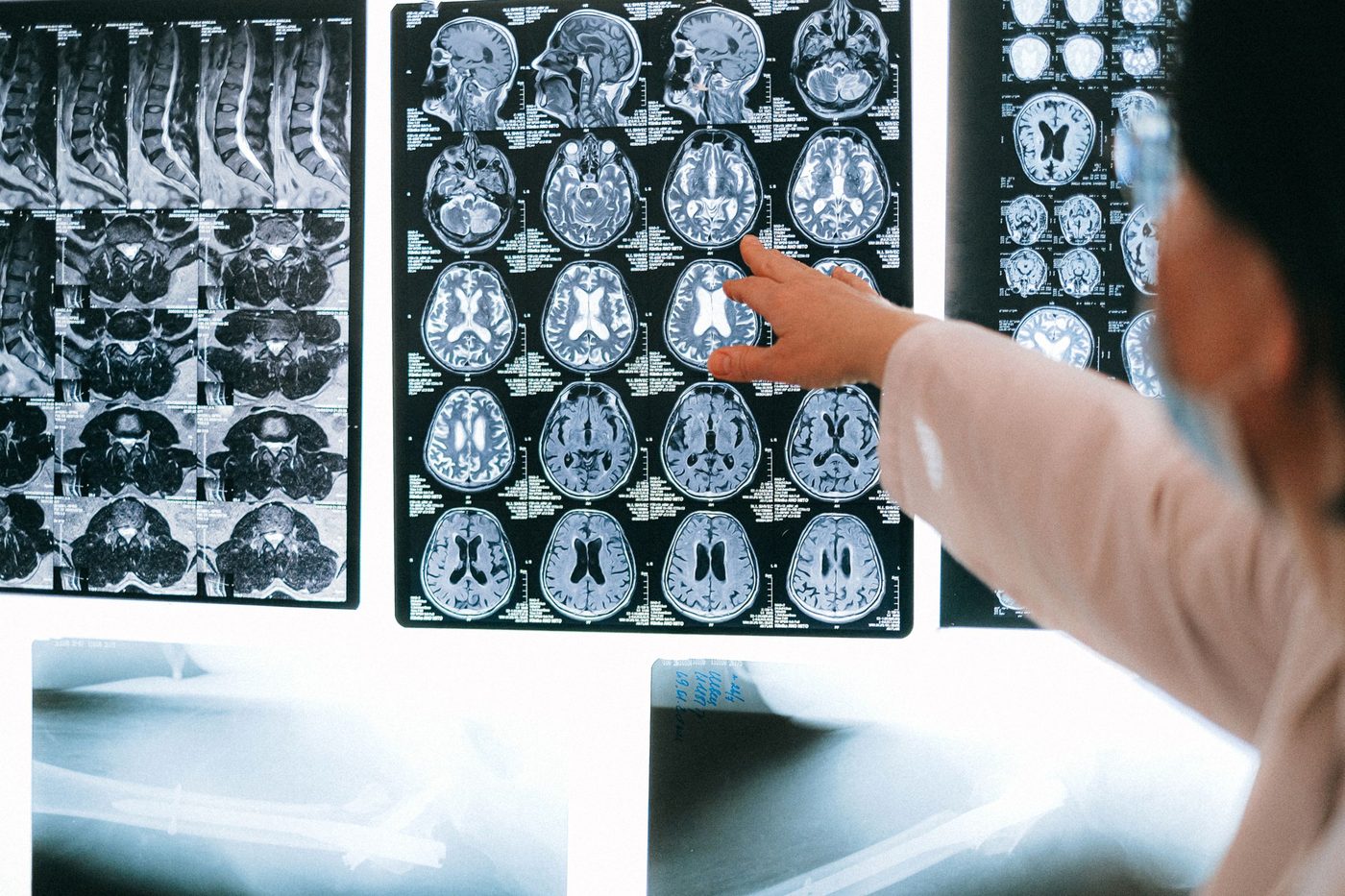
In brain research, the measuring is often done with an MRI scan, a detailed picture of the brain's structure, plus a test of a skill.
Have a question you want to investigate?
Explore our faculty-guided programs, or tell admissions what you are curious about.
In brain research, measuring before and after often means two MRI scans of the same person, taken months apart.
A keyboard study that measured both
In 2009, Krista Hyde and six colleagues published a study in the Journal of Neuroscience. They followed 31 children, about 6 years old, from public schools in the Boston area. None had formal music training. Fifteen took weekly half-hour private keyboard lessons for about 15 months. The other 16 had no instrument lessons, only a weekly 40-minute group music class at school. Every child had an MRI scan at the start and again 15 months later, plus tests of finger movement and of telling short melodies and rhythms apart.
Compared with the control group, the children who took lessons showed more structural change in:
a motor area for the hand (the right precentral gyrus)
the corpus callosum, a thick bundle of fibers that links the left and right halves of the brain
the right primary auditory area, where sound first reaches the cortex
The changes matched the skills. More change in the right motor area and the corpus callosum went with more improvement on a left-hand finger test (the right side of the brain controls the left hand). Change in the auditory area went with more improvement on the melody and rhythm test. On general tests such as vocabulary, the lesson group didn't improve more than the control group.
Thirty-one children is a small sample, and there are other limits. The auditory result passed only a looser statistical threshold, not the stricter whole-brain one. The lesson group's parents had more education on average, and the authors adjusted for this. The scans showed no group differences before lessons began, but the authors write that they can't fully rule out that some children are born with traits that make them more likely to keep practicing.
The children in the Hyde study learned keyboard, not violin, so take care when you apply its results to string players.
How you could test it with free tools
You can't scan brains at school. You don't need to. Measure a skill instead, and compare students who play with students who don't. Just say clearly in your paper that you measured a skill, not brain structure.
Step 1: Pick one skill and ask for approval (about a week)
Choose one skill that playing might train. Just one. For string players, pitch memory is a good fit: holding a short series of notes in mind and noticing when one changes. Hyde's melody test worked the same way: two five-note phrases, judged same or different. Write a one-sentence definition of your skill.
You'll be testing people, so show your teacher a one-page plan this week. Approval takes time.
Step 2: Build a free online test (2 to 3 weeks)
Make the sounds. In Audacity, a free audio editor, Generate > Tone makes a pure tone at any frequency you type. Generate five tones in a row to make a phrase, copy it and change one note in the copy. Save each pair (phrase, short silence, phrase) as one file. You'll want 30 to 40 pairs, half the same and half different, some with big changes and some with small ones. Since you type each frequency, a change can be smaller than one piano key.
Build the test with jsPsych, a free JavaScript library for experiments that run in a web browser. Its audio-keyboard-response plugin plays a sound and records which key was pressed. Use S for same and D for different, and set response_allowed_while_playing to false so no one can answer before the second phrase ends.
Host it on Cognition.run. The free plan allows 3 tasks, 50 collected runs per task and 50 sound files of up to 2 MB each, so keep one file per pair.
Add a few questions: instrument, years of lessons, weekly practice, grade. Goldsmiths, University of London offers a free questionnaire, the Gold-MSI, with a section on musical training.
Try it on three or four friends once your plan is approved. Use a separate copy of the task so these trial runs don't count toward your 50. If they get almost every item right, make the small changes smaller.
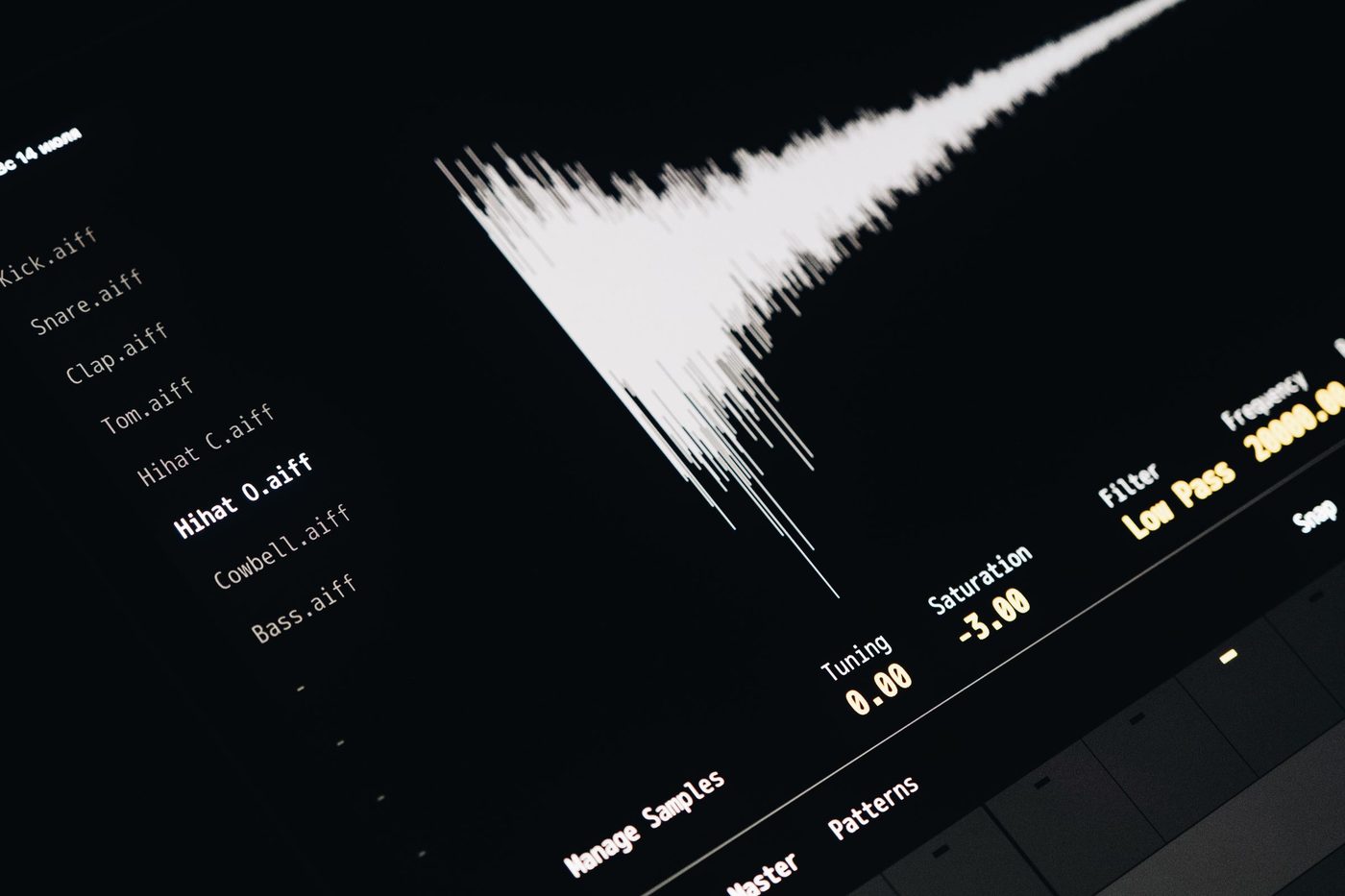
Every item in your test will be a short sound file, and audio software shows each one as a waveform like this.
Step 3: Test students, with school approval (2 to 6 weeks)
Nobody takes your test until your school says yes. Depending on your school and country, an IRB (institutional review board, a committee that checks research on people for safety and fairness) may also need to review the plan. Every participant must agree to take part, and for anyone under 18 a parent or guardian must consent too. Use ID numbers, not names. Tell everyone their answers are stored online and that they can stop at any time.
If you can, test everyone in one quiet room with the same headphones at a comfortable volume. Different speakers and noise at home can hide a real difference. Aim for at least 20 students per group (that's 40 runs, still under 50). Even then, only a fairly large difference is likely to show up, so "no difference" wouldn't prove there is none.
Step 4: Compare players and non-players (1 to 2 weeks)
Download your data from Cognition.run as a CSV file and turn each person's answers into a percent-correct score. In JASP, free statistics software, an independent samples t-test checks whether the gap between the group averages is bigger than chance would explain. A correlation shows whether, among players, more years of lessons go with higher scores. Players with more years are often older, so check whether grade alone explains the pattern.
Make a research poster or a short paper with a bar chart of the two averages and a scatter plot of years played against score. In the discussion, say plainly what your design can't show. If players score higher, music might have trained their ears. Or students with good ears might have been more likely to keep playing. That's the same puzzle the Hyde study was built to address.
Music questions you can test without a scanner
Hyde's team needed two brain scans per child and 15 months just to start on "Does music change your brain?" Your question should say who you'll test and exactly what you'll measure.
Too big
Workable
Does music change your brain?
Do students with five or more years of string lessons score higher on a five-note same-or-different test than students with no lessons?
Does practice make a difference?
Among players at your school, do scores rise with years of lessons, or with hours of practice per week?
Is violin better than piano for your ears?
Do violin players, who place each note by ear, detect pitch changes smaller than one piano key better than piano players do?
These questions can't prove that music caused a difference. If your school has a beginner orchestra, you can go one step further: test new members and some non-players at the start and end of a semester. Both groups may improve just from taking the test twice, so you'll need the non-players.
Where the brain scans come in
The pitch test is original research: you collect new data. Two other kinds of research paper can work with brain scans, which a school test can't.
A literature review reads the brain studies already published and asks what they add up to. Do studies that follow children over time, like Hyde's, find the same brain differences as comparisons of adult musicians? How did each one measure skill? Search PubMed or Google Scholar for "music training" with "longitudinal".
A research proposal is the full plan for a study that needs an MRI lab. Since Hyde's authors couldn't fully rule out inborn traits, you could propose randomly assigning young beginners to two years of violin lessons or a waitlist, with an MRI scan and a pitch test at the start and end. Say what you'd ask, how you'd do it, how many children you'd need and what data you'd collect. A study that scans children also needs an IRB's approval, parents' consent and each child's own agreement.
Your violin was the question. Now research it.
CRI students research questions of their own with university professors in many fields, such as biology, economics, chemistry and history, and each student writes their own paper: an original study, a literature review or a research proposal. To see how the programs work, visit CRI's research programs.
Sources
Hyde, K. L., Lerch, J., Norton, A., Forgeard, M., Winner, E., Evans, A. C., & Schlaug, G. (2009). Musical training shapes structural brain development. Journal of Neuroscience, 29(10), 3019-3025. link (free full text also on PubMed Central)